
Checkpoint: The Myth Of The Originalist Court
Quang Vuong
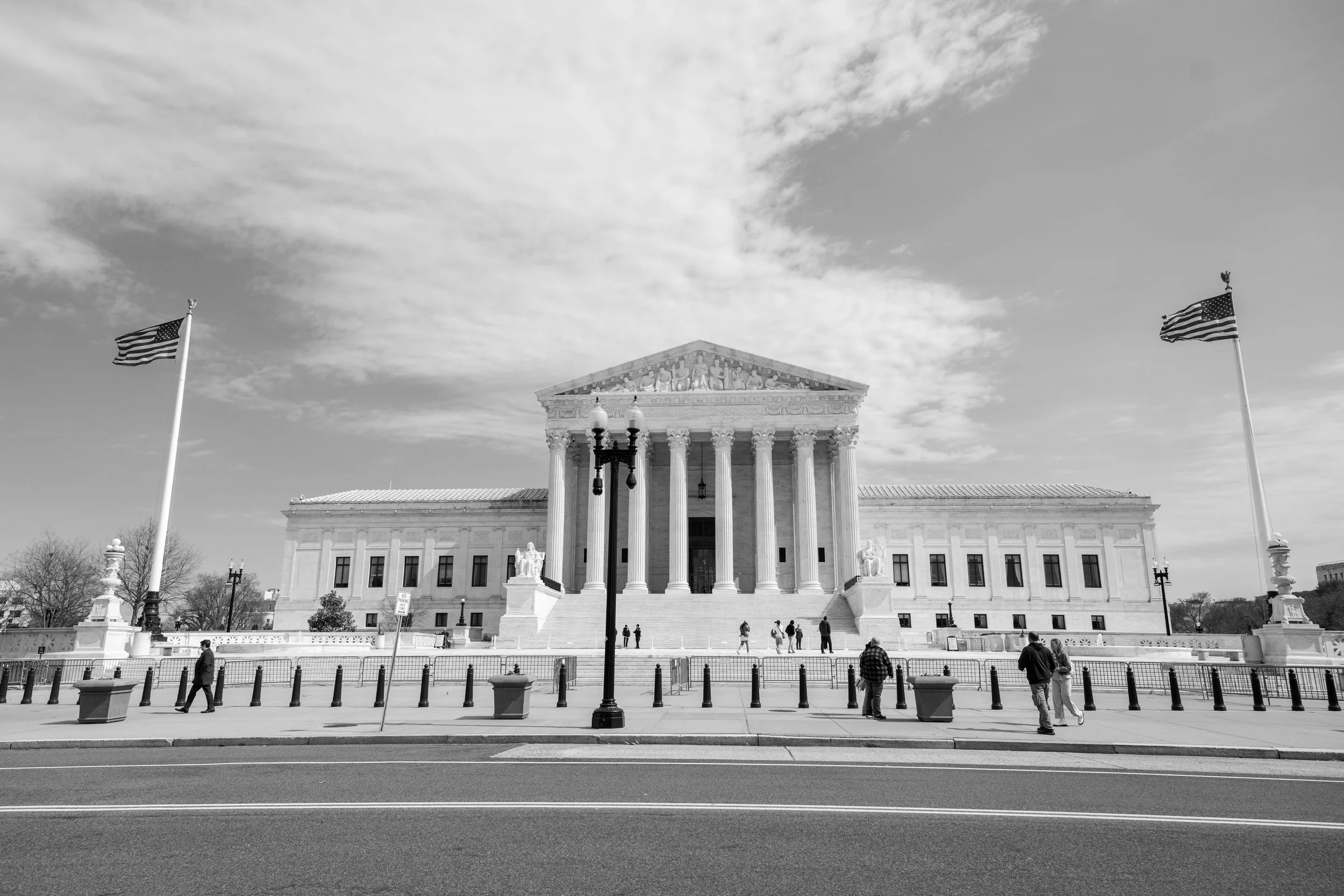
The Supreme Court, especially in the last five years since the ruling in the Dobbs Decision that overturned Roe v. Wade, has been the subject of scrutiny, resentment, and calls for reform. The Court, with its lifetime appointments and President-nominated, Senate-confirmed justices, operates, or purports to operate, as an institution that exists above the perpetual swinging of the left-right political pendulum. The Court was conceived to resist political whims and leanings as their decisions institute precedent that dictates the laws of the land. Following from this understanding, justices have historically been described as “originalist” or “living constitutionalist” rather than conservative or liberal or Republican or Democrat.
The term “originalist” refers to a legal philosophy that encourages interpretation of law as its writers intended. Originalism leaves less room for interpretation and argues that the Constitution ought to be applied based on its original meaning at the time it was adopted. The so-called “originalist” justices currently serving in the Supreme Court are Chief Justice John Roberts, and Justices Clarence Thomas, Samuel Alito, Neil Gorsuch, Brett Kavanaugh, and Amy Coney Barrett. Originalists believe that laws do not change and shouldn’t be applied differently even when modern contexts might call for it.
In contrast, “living constitutionalism” is the legal philosophy that laws should be interpreted with the context of the present in mind. Living constitutionalists believe that the Constitution has dynamic meaning that can evolve and adapt to modern society's needs. The living constitutionalists on the Supreme Court are Justices Sonia Sotomayor, Elena Kagan, and Kentanji Brown Jackson. In theory, the originalist justices should rule that no law can be changed or interpreted differently without a formal amendment to the Constitution, while the living constitutionalists would decide in favor of an adaptive understanding of the law without requiring a supporting amendment.
In the year 2026, however, the historical and traditional descriptor "originalist" is no longer apt. To say that the justices on the Supreme Court base their rulings on "originalism" rather than their own personal political views and values is to ignore the plainly conservative language of their written opinions and the measurable effects of their decisions that forward their conservative agendas. Our current judiciary is made up of some living constitutionalists, perhaps, but certainly no originalists. The justices that claim originalism are indeed conservative.
From 1970 to 2020, “originalists” had a 5-4 majority on the Court. After the death of Justice Ruth Bader Ginsburg in 2020, President Donald Trump appointed Justice Amy Coney Barrett, shifting the Court’s balance to 6-3. Consequently, the so-called originalists have had a reliable majority since then. Thus, they’ve recently grown more comfortable showing their true colors. They no longer need to consider building bridges with their counterparts and can forward their conservative pedigrees (all six originalist justices are current or past members of the Federalist Society) and promote those agendas. The Supreme Court has a conservative majority masquerading as an originalist one, and the conservative majority on the Court uses originalist historical claims to justify right-wing decisions while abandoning historical precedent whenever it clashes with their conservative intentions.
In the 2023 decision Students for Fair Admissions v. Harvard, all six conservatives on the Supreme Court ruled that the use of racial criteria for university admissions violates the equal protections guaranteed by the 14th Amendment. The majority opinion referenced the Amendment and its intrinsic principle of color-blindness. Color blindness, however, is not written into the Constitution’s text and is not part of American legal history (think slavery, segregation, gerrymandering, etc.). This adopting of a color-blind approach to laws around racial discrimination is, if anything, living constitutionalist rather than originalist, and was a conservative decision that aligns with the laissez-faire approach to racial justice characteristic of American conservatism.
When the founding fathers included speech and the press as core freedoms of the Constitution, they did not mean to protect speakers and writers from the consequences of their words. Rather, freedom of the press referred specifically to the rule against press licensing, while freedom of speech ensured that sincere statements of one’s views were immune from governmental regulation. The Alien & Sedition Act criminalized some political speech and was passed in 1798 by many of those same founding fathers. Nevertheless, the originalist justices have spent decades extending constitutional protections to speech by corporations and unions, to people using bigoted and threatening language, and to incite violence and division. This aggressive judicial protection for free speech is not originalist, because it moves to expand the protections laid out in the Constitution rather than to apply the Constitution using the original intent of its writers.
The Roberts Court has ruled extensively in favor of protecting and expanding the 2nd Amendment, in cases like District of Columbia v. Heller (2008), McDonald v. City of Chicago (2010), Caetano v. Massachusetts (2016), and New York State Rifle & Pistol Association v. Bruen (2022) just to name a few. Historians widely concur, however, that the original meaning of our right to bear arms referred to the individual states’ rights to raise militias without interference from the federal government. This understanding only shifted in the 1970s with moneyed interference from the National Rifle Association, and the myth that this Amendment protects individuals’ rights to possess their own firearms has led to countless tragedies from gun violence. If the Roberts Court were truly originalist, those justices would not have devoted such attention to expanding a narrow protection.
In the 2013 case Shelby County v. Holder, the Roberts Court struck down a section of the Voting Rights Act, ruling that Congress cannot treat different states differently under the law, no matter that some states are more egregious offenders in terms of institutionalized racial discrimination. Section 2 of the 15th Amendment, however, gives Congress the power to enforce that Amendment through “appropriate legislation.” The Constitution does not guarantee states equal protections relative to one another, and it is certainly not originalist to assert that it does. Disenfranchising voters who are members of marginalized communities is a hallmark of the far right movement, and Shelby County v. Holder made it easier for states to enact voter suppression measures.
The Republican-appointed justices are using an originalist-appearing approach “to expand executive power in democracy-eroding ways, undermine long-standing rights and protections, and entrench inequality and marginalization.” This is the opposite of the intent of true originalism; these judges are not originalists. Justices publicly call themselves originalist while flouting doctrine behind closed doors. They are power hungry conservatives eroding our Constitutional protections, and the outdated descriptor “originalist” provides cover for them. Mainstream legal reporting follows the outdated paradigm, describing the Court's actions as philosophical "originalism" rather than recognizing a policy-driven onslaught actively dismantling established precedent.
Not only is the term "originalist” no longer an accurate description for the Republican-aligned justices on the Supreme Court, but the use of this term in legal reporting actually makes the intentions and political views the court more opaque, makes the judicial branch seem above reproach, and disarms calls to pack the bench by expanding the number of justices. Using outdated frameworks to describe judicial decisionmaking benefits conservatives and makes the Court harder to understand. This lack of transparency at our highest Court threatens the integrity of our judicial system and absolves justices of deserving criticism. The only way to prevent the Court from further eroding our democracy is to implement significant Court reform, with measures like judicial term limits and expanding the number of justices on the Court.
