
Latin Analysis: Uruguay Emerges As The Regional Leader In Electric Vehicles
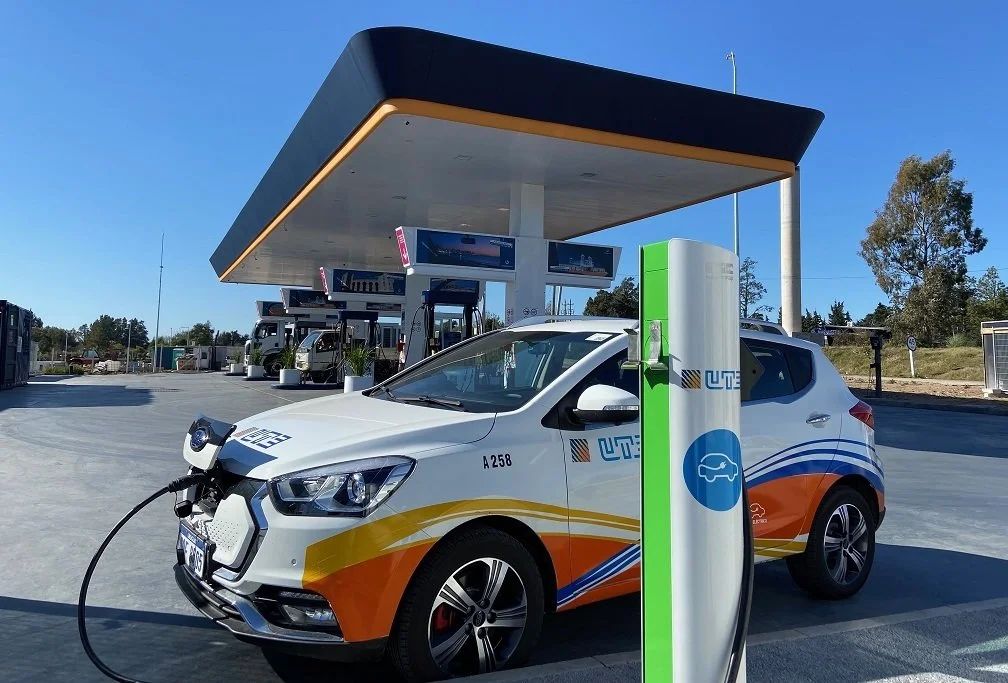
Uruguay has emerged as a regional leader in electric vehicle (EV) adoption, outpacing every country in Latin America with its rapidly evolving transport sector. This remarkable shift, driven by a combination of nearly fully renewable electricity, fiscal incentives, soaring fuel prices, and affordable Chinese electric models, has propelled Uruguay into a new phase of its broader energy transition. While this rapid expansion has raised concerns among policymakers and industry operators over infrastructure capacity, Uruguay’s EV leadership marks a movement towards cleaner air and a transport system increasingly aligned with the country’s long-term decarbonisation goals.
A Regional Leader In Electric Vehicles
Uruguay now occupies a position unmatched anywhere in Latin America. Globally, Uruguay’s EV adoption is on par with several advanced European markets and ahead of major automotive economies such as the United States and Japan. Surpassing all other countries in Latin America, electric vehicles in Uruguay have reached a market penetration of around 28% in the third quarter of 2025 according to the Latin American Zero Emissions Observatory (ZEMO). This is well ahead of the country with the next largest share, Costa Rica, which is at 16%. In absolute terms, Uruguay registered about 3,100 EV sales in the third quarter of 2025 alone, more than tripling sales from the previous year. Uruguay stands out in the region compared to countries like Argentina and El Salvador, which have significantly smaller market shares and low absolute EV sales, despite Uruguay’s comparably smaller population. While Brazil and Mexico lead in total unit volumes due to their far larger markets, Uruguay is among the top performers in both share and absolute terms, alongside Colombia and Costa Rica.
Several factors explain the scale and speed of Uruguay’s transition. The first is the exceptionally high cost of gasoline. Uruguay has some of the highest fuel prices in the world, reaching about $7.40 per gallon. These prices reflect heavy fuel taxes that play a central role in government revenue. The high price of filling a tank is, therefore, a major incentive pushing cost-conscious drivers to seek out alternative options.
Fiscal incentives further tilt the market toward electric alternatives. Uruguay eliminated its 23% import tax on EVs, making them price competitive compared to combustion models. Furthermore, the “Subite” programme, launched by the Ministry of Industry Energy and Mining (MIEM), provides additional financial incentives for EVs. This includes rebates and an exemption from an excise tax titled the Specific Internal Tax. The combination of high fuel costs and these fiscal incentives introduced by the government make EVs not just an environmentally conscious or aspirational purchase, but an economically rational one.
China’s Presence In Uruguay’s EV Market
The economic appeal of EVs has been strengthened by the existence and proliferation of affordable Chinese models in Latin America. Chinese companies Build Your Dreams (BYD) and the Jianghuai Automobile Group (JAC) are dominant in Uruguay’s EV industry, with BYD making up around 32% of new registrations in Q3 2025, and JAC at 24%. Affordable pricing for their models drives their market penetration – the BYD Seagull, for example, sells for just under $20,000 in Uruguay, while the BYD Yuan Pro is roughly $10,000. Local car dealers say these brands succeeded because they moved earlier than their Western competitors and, importantly, partnered effectively with local importers and banks. This dominance is reflected in the wider region, with BYD and other Chinese brands leading in Costa Rica, Brazil, Mexico, and Colombia, reinforcing the size and influence of Chinese automakers across Latin America.
This aggressive push has propelled Chinese firms well beyond the EV niche. BYD is now the third-largest vehicle seller in Uruguay across all categories, trailing only Chevrolet and Hyundai. China’s overall market share in the country has more than doubled since 2023, helped by the rapid uptake of compact and mid-range models that are priced well below their Western equivalents.
The Broader Energy Transition
Uruguay’s EV boom is part of a larger national strategy that stretches back nearly two decades. The country is widely recognised as a global leader in the energy transition thanks to its “2005-2030 Energy Policy”, which was designed to reduce dependence on imported fossil fuels. This strategy helped Uruguay produce an average of 94% renewable electricity between 2018 and 2023, and reach 99% renewable generation in 2024. President Yamandu Orsi has pledged to continue this strategy through what the government calls its “second energy transition” - this focuses on decarbonising transport and industry, while expanding investment in areas such as sustainable mobility and green hydrogen.
Public transport plays an important role in the transition. In the capital, Montevideo, a new fleet of electric buses has been introduced, supported by the Renewable Energy Innovation Fund (REIF) – this program has been advanced by the Uruguayan government and is mainly financed by the United Nations Joint SDG Fund and private capital from local commercial banks. The first phase of REIF’s program has financed 50 electric buses, which is predicted to cut around 42.5 tonnes of CO2 emissions per year. REIF has also created targeted training programmes for women drivers and mechanics, ensuring the transition to sustainability encourages a more gender-inclusive workforce, rather than focusing solely on emissions. BYD separately delivered 100 electric buses to the largest transit operator in the country, which hopes to transition to a fully electric fleet by 2040.
Infrastructural Challenges
Despite rapid progress in EV adoption, Uruguay does face hurdles. Mainly, its charging network has not expanded fast enough to keep up with soaring electric vehicle ownership. Industry figures note that the country has only about 360 public charging points and that these already struggle to meet demand. Operators warn that the gap between the expanding electric fleet and the current charging network is the foremost barrier to continued growth in the EV industry.
Private sector stakeholders believe the most important business opportunity now lies not only in public infrastructure, but also in residential and corporate charging, where most EVs are expected to be charged. Companies are, therefore, looking to sell and install chargers in office buildings and residences, to support home-based charging.
Uruguay has demonstrated what is possible when renewable energy, consumer incentives, and private-sector innovation move in the same direction. Its 99% renewable electricity matrix removes one of the biggest barriers to cutting transport emissions, while high fuel taxes and targeted tax exemptions make EVs cost competitive. At the same time, an early wave of affordable Chinese electric models has given consumers options that match their budgets. The result is a transport revolution propelling Uruguay ahead of its neighbours. As the ‘second energy transition’ expands from personal vehicles to public transport, Uruguay is demonstrating how quickly a transport system can change with the right conditions in place.