
Caribbean Review: Saint Kitts And Nevis’ Prime Minister Pledges For A Republic
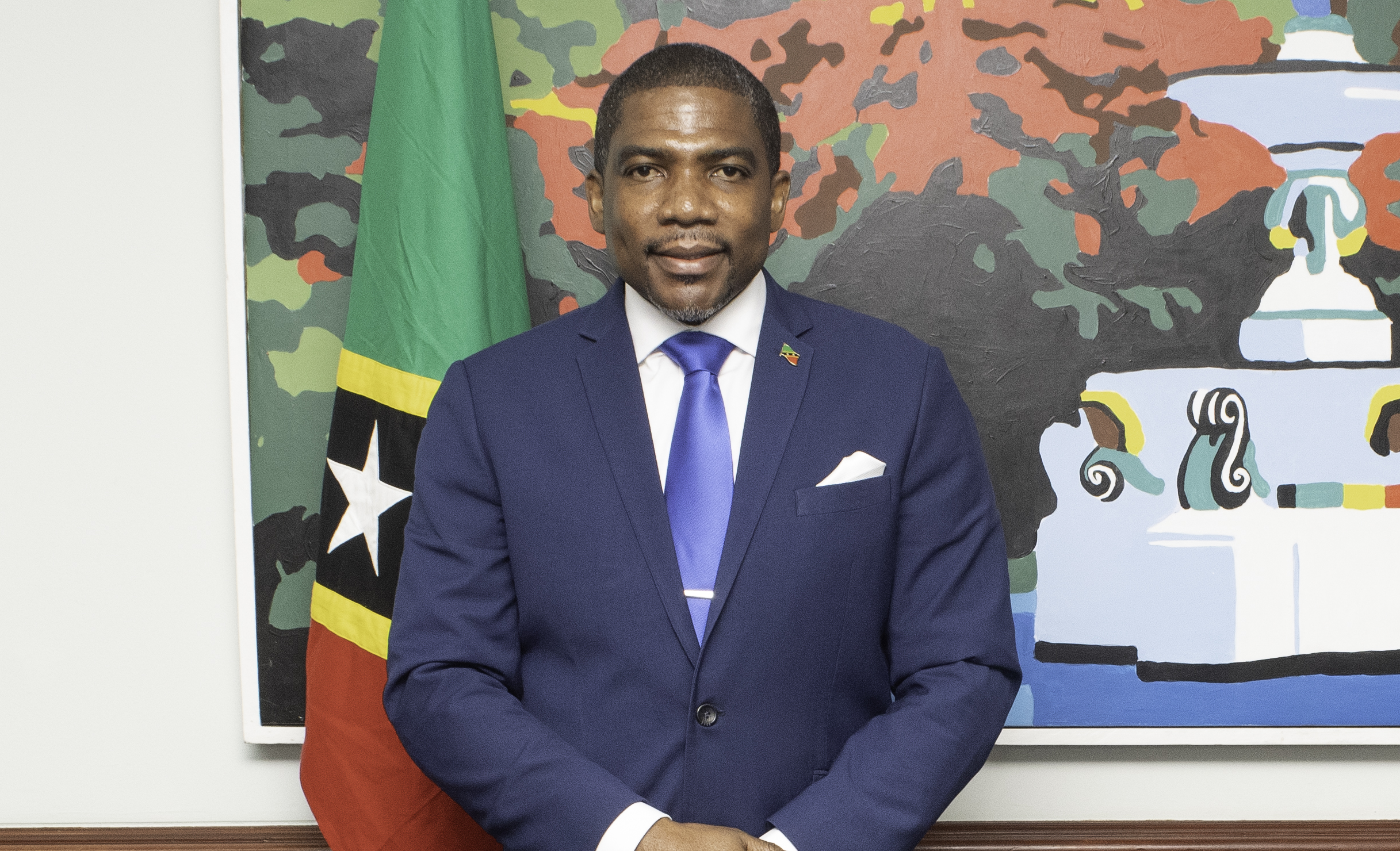
Saint Kitts and Nevis Prime Minister Terrance Drew has stated the country is in talks about the transition to a republic separate from the British monarchy, as well as plans to begin public consultation on the matter during his leadership; however, no specific dates have been announced.
In January of this year, Prime Minister Drew met with King Charles III to discuss sustainability, the environment, youth advocacy, and education. The meeting, however, raised questions about whether the Saint Kitts and Nevis government’s pledge to become a republic was mentioned in this diplomatic exchange, as such a move would remove the king, as well as any future British monarch, as the head of state on the islands.
“Our nation is much closer to true independence than not,” Prime Minister Drew declared in September 2023. “As we approach 40 years as an independent nation in 2023, we also set our eyes on transitioning into a republic. We trod on towards that goal. That goal of self-determination and self-actualisation, where we truly encapsulate our sovereignty.” Critics in Saint Kitts and Nevis began questioning whether Drew remained committed to his pledge for a republic after his meeting with King Charles.
New Republics
Initial pushes for the transition began in 2022 when Deputy Prime Minister Shawn Richards launched a joint political bid to replace British rule on the islands. “The advancement of the decades has taught us that the time has come for St Kitts and Nevis to review its monarchical system of government and to begin the dialogue to advance to a new status, just as Trinidad, Guyana, Dominica, and now Barbados have done,” Mr Richards told reporters.
This push came in a moment where some Caribbean campaigners were also calling for the British government to stop sending royals overseas after insensitive and disconnected remarks about natural disasters, and for the Commonwealth to sever ties with the monarchy. They were also driven by protestors in the Caribbean commonwealth for reparations for slavery from the British, displaying banners that read “end to colonialism” and “compensation now”.
Saint Kitts and Nevis was the last British territory in the Caribbean to gain independence in 1983 and chose to remain a constitutional monarchy with the British monarch as head of state. Across the Caribbean, Barbados’ November 2021 transition to a republic has incentivized other Caribbean Commonwealth states to reflect on whether they should also become republics, including Saint Kitts and Nevis.
Former British Conservative deputy chairman Lord Ashcroft conducted research in spring 2023 on what Commonwealth nations would vote to leave. His results found that Australia, Canada, the Bahamas, Jamaica, the Solomon Islands, and Antigua and Barbuda would vote to cut ties with the monarchy. Results also showed that Saint Kitts and Nevis would keep the monarchy, with 52% voting in favor of remaining in the commonwealth, possibly due to British economic support on the islands. This report, while conducted with a relatively small sample size, reflects how many are still in favor of British ties in Saint Kitts and Nevis. British Caribbean independence has also created shock waves of pro-republican transitions, reaching Scotland, where polls show the majority of Scots are in favor.
Sovereignty’s Importance Today
Saint Kitts and Nevis’ government has not publicized any dates to vote for or discuss a possible transition from a constitutional monarchy. Prime Minister Drew’s inaction has led many to question whether a new Kittian and Nevisian republic will ever come about. Britain's monarchy controls much of the international diplomacy and political powers of Saint Kitts and Nevis and is still a large trade partner for the islands. The late Queen Elizabeth is still displayed on the money of Saint Kitts and Nevis, further showing the tie the islands have with their former colonial power. A critique by many on the islands who seek reparations for the dark past of the British Caribbean and don’t want any association with the British Monarchy. Many feel disconnected from a largely distant ruler in England and feel they should hold no say in the government of Saint Kitts and Nevis.
A new republic could be a healthy transition for Saint Kitts and Nevis and for the region, lessening Western influence and political oversight in the Caribbean. As tensions grow between Venezuela and the United States, and the Trump administration’s installation of bases across the Caribbean, regional sovereignty could be the decisive factor between being pulled into a war or remaining uninvolved, especially important for commonwealth states, as Britain remains a close war ally of the United States. Saint Kitts and Nevis’ political independence could open up opportunities in trade and aid from other nations unaligned with the U.K. or the U.S., who hold large influence over Caribbean international politics.
