
Latin Analysis: Nasry Asfura Takes Office After A Contested Election In Honduras
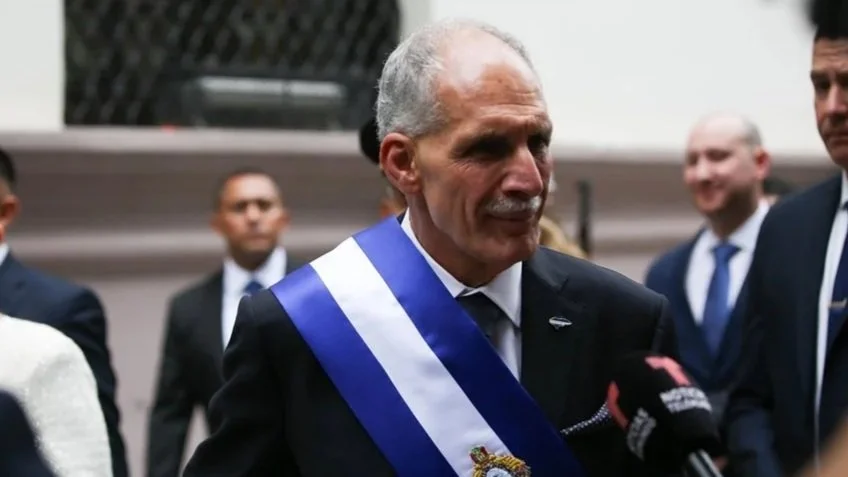
Honduras is entering a new political phase marked by a fragile transition of power, deep polarization, and a crisis of confidence in democratic institutions. The inauguration of Nasry “Tito” Asfura as president follows a highly contested election, raising questions about electoral legitimacy, governance, and the direction of the new leader’s economic and foreign policy. His leadership signals not only a shift back toward conservative leadership, but also a potential recalibration of Honduras’s relationship with the United States and its approach to development, security, and human rights.
A Contested Election And Asfura’s Political Ascent
President Nasry Asfura was inaugurated on January 27 after an election period marked by fraud allegations, a tight contest, and a protracted vote count. The election results came almost a month after the November 30 vote, due to infighting within the national electoral agency and technical hiccups. Asfura, age 72 and part of the conservative National Party, ultimately won by a narrow margin, receiving 40.3% of the vote compared with the 39.5% obtained by the Liberal Party’s Salvador Nasralla.
Asfura’s career has taken him from the private construction sector to long-term municipal and national political roles. Earlier on, he trained as a civil engineer and became a prominent businessman in the construction industry. Asfura then began his public service in the 1990s, starting as a municipal tax assistant and eventually becoming a congressman in 2010 for the duration of former President Porfirio Lobo Sosa’s four-year term. In his next role as mayor from 2014 to 2022, Asfura’s background in construction shone through as the government oversaw several major infrastructure projects.
Asfura is colloquially known as “Tito”, a childhood nickname, or “Papi a la Orden” (“daddy at your service”), a nickname that was coined during his campaign to be candidate for mayor of the Central District in 2005. The nickname has since become a political brand – it is in fact his handle on his various social media platforms – and intends to project a persona of a hardworking “man of the people”, always ready to serve constituents.
During the 2025 campaign – his second presidential run after he lost to Xiomara Castro in 2021 – Asfura presented himself as a pragmatic, pro-business figure, with the economy at the top of his agenda. The economic premise of his campaign was that creating a business-friendly climate would boost employment and generate the income needed to cover the country’s needs. He also emphasized the need to expand Honduras’ energy and transport infrastructure, and to encourage both private-sector involvement and the expansion of renewables in the energy sector. During Asfura’s campaign, he travelled to Washington to meet with financial partners to provide credence to his plans to attract foreign investment. On foreign relations more generally, he signalled his desire to strengthen ties with the United States, along with Israel and Taiwan.
Migration is likely to be a central pillar of Asfura’s relationship with the United States. Around two million Hondurans live in the United States, many without secure legal status, and remittances account for roughly a third of Honduras’s GDP. Asfura has urged the Trump administration to reinstate Temporary Protected Status (TPS) for Hondurans, which previously shielded tens of thousands from deportation, while US officials have emphasized cooperation to curb irregular migration and combat organized crime.
Polling ahead of the election showed employment, corruption, healthcare, and education as the dominant public concerns, followed by security issues including violent crime and political violence. His promise of economic stabilization and job creation appealed to voters exhausted by political volatility, even as skepticism remains over whether growth driven by foreign investment would translate into tangible improvements for ordinary Hondurans.
A Fragile Mandate And New Political Direction
Asfura begins his four-year term facing a serious deficit of public trust in electoral institutions, following the limited transparency and allegations of fraud defining the contested election. In these early stages of his is presidency, he likely to face sustained pressure from opposition parties and political elites, as well as civil society, who question the legitimacy of his leadership. The election amplified existing doubts about the electoral system – the core electoral architecture in Honduras has remained essentially unchanged since 2004, despite a 2021 legislative update that is widely perceived to have failed to improve transparency or legal certainty in practice. The partisan management of electoral institutions – with leadership of electoral bodies split between the three main parties – means that political negotiation and incentives are prioritized over technical capacity.
Apart from this deep crisis of confidence in Honduran institutions, Asfura will also have to confront a fragmented congress when advancing his legislative agenda. While his National Party won the most seats in the legislature, obtaining 49 of the 128, this fell short of the 65 seats necessary for a simple majority. A two-thirds majority is needed to pass major legislation and constitutional reforms – this could be obtained if Asfura’s party allies itself with Nasralla’s Liberal Party. However, this is complicated by Nasralla’s challenge to the outcome of the presidential election, which he initially refused to accept. Another element of the congressional makeup that deserves attention is the presence of women – 35 women occupy seats, representing less than a third of the total. Although this reflects a gradual trend of increased representation compared with previous decades, this does not guarantee a legislative agenda focused on women’s rights, especially in the context of a conservative government.
Asfura’s victory reflects a wider regional shift towards more conservative leadership and deeper alignment with the Trump administration. This may reshape regional alliances as Asfura distances his government from leftist regimes in the region, but the rightward drift also raises the risk of agendas that may undermine civil liberties and human rights protections.
Activists, human rights defenders, and environmentalists have been especially outspoken about these dangers. Asfura’s meetings with US actors and international financial organizations signal a return to large-scale extractive and agribusiness projects, which have in the past been condemned for their lack of transparency and their increased risk to Indigenous peoples and rural communities. Honduras has dozens of active socio-territorial conflicts and a history of criminalizing protest – while this economic agenda may generate growth, it presents risks to human rights and may negatively impact underrepresented groups.
U.S. decision-making regarding Honduran affairs complicates these risks. In 2022, former president of Honduras, Juan Orlando Hernández, was extradited to the United States, convicted on drug trafficking and firearms charges, and sentenced to 45 years in prison. He was also accused of human rights violations, and during his presidency, his policies included expanding palm oil production and other extractive economies that negatively impacted the environment. In the run up to the 2025 election, Hernández was pardoned by the Trump administration, just before the Trump-endorsed Asfura was declared winner.
For environmental defenders, Hernández’s pardon marked a symbolic reversal with tangible consequences. His conviction had been seen as rare evidence that even the highest levels of power could be held accountable. The decision to erase that sentence has consequently reinforced fears of renewed impunity, especially as Asfura’s economic agenda echoes policies that previously prioritized mining, hydroelectric projects, and large-scale agribusiness at the expense of environmental protection and community consent. The election outcome has therefore been widely interpreted as a setback for efforts to secure justice, accountability, and protection for land and environmental defenders.
These concerns are sharpened by the legacy of the outgoing government. While Xiomara Castro’s administration increased social investment and signalled openness to human rights mechanisms, it ultimately failed to dismantle entrenched corruption networks or reform the electoral system that produced the current legitimacy crisis. Promised initiatives, including the establishment of an international anti-impunity commission and progress on land and environmental protections, stalled or were abandoned, leaving Indigenous and rural communities vulnerable as political power shifts once again.
Asfura takes office with strong backing from the private sector and the United States, but with limited democratic legitimacy at home. His ability to govern will depend on navigating a fragmented congress, addressing deep public distrust, and deciding whether his administration will mark a departure from the National Party’s troubled past, or entrench it further.