In America: Court of Appeals To Retry Defamation Case–Sarah Palin VS ‘The New York Times’
Andres Oropeza
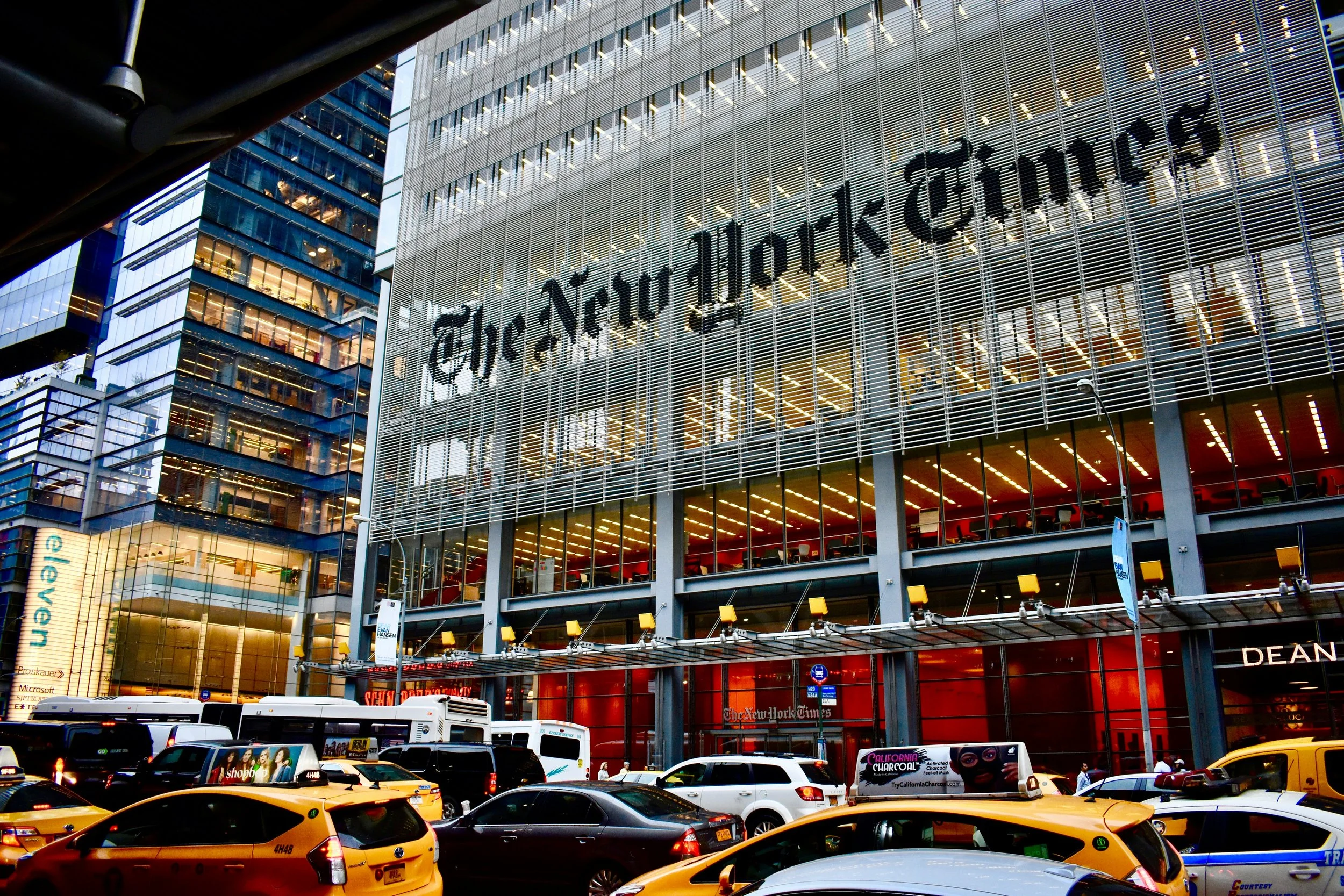
In 2017, Sarah Palin, former governor of Alaska, sued The New York Times for allegedly publicly defaming her in an editorial falsely linking her political rhetoric to the 2011 Tucson mass shooting. After the case was initially dismissed in 2022, the Second Circuit Court of Appeals has revived it and is sending it back for a new jury trial. The case focuses on whether or not The New York Times acted with actual malice and/or reckless disregard for truth in their editorial drafting process and the impact it had on Sarah Palin. The outcome of the case could set a precedent of reprimanding journalism that spreads misinformation.
Palin v. New York Times Company
In the article “America’s Lethal Politics,” the writers discussed an attack in Maryland where several members of Congress and other government officials were shot at. The article emphasized the seriousness of public shootings, the country’s desensitization to such acts of violence, criticized how readily available guns and ammunition are in this country, and claimed there is an evolving pattern in these types of incidents. The New York Times believed conservatives, gun-lobbyists, and the right-wing media have double-standards in these incidents. They claimed the right-wing doesn’t condemn hate speech and violent crimes committed by right-winged individuals but is quick to shame violent individuals who believe in left-wing ideology. The article then discussed several acts of violence that were politically motivated. The writers argued that America’s political environment has encouraged these kinds of actions.
After discussing the 2011 shooting of Congresswoman Gabrielle Giffords, the writers noted that Sarah Palin’s political action committee (PAC) had right before released a map of targeted electoral districts. New York Times’ Opinion Editor James Bennet claimed in the publication that “the link to political incitement was clear,” and that the map put several Democratic representatives “under stylized cross hairs.” This claim was false; quickly after being called out for it, the New York Times removed the language from the article and publicly apologized.
Sarah Palin filed a defamation lawsuit against The New York Times and the former employee. Palin argued that the editorial falsely linked her PAC's map to the 2011 shooting and the article was in fact defamatory by making the claim that there was a "clear" and "direct" link between the map and the shooting. Palin believed the editorial knowingly and recklessly misstated facts harming her reputation.
The New York Times claimed its conduct did not meet the legal standards of defamation. They argued that the article in its nature was political commentary and the error was inadvertent. They claimed that there was no evidence that Bennet knew the falsity of the statement connecting Palin’s map to the shooting and therefore there was no motive to harm Palin. The New York Times argued by promptly correcting the language in the editorial they showed good faith rather than recklessness that Palin alleged.
In 2022, U.S. Federal Judge Jed Rakoff used Federal Rule of Civil Procedure 50 to dismiss the case while the jury was still deliberating. Judge Rakoff ruled that Palin had not met the constitutional burden of proving that the New York Times had defamed her. Under this initial ruling, the court found that there wasn’t proof of actual malice, the editorial process supported negligence rather than recklessness, and the swift correction undercut the claim of malice.
The Case Has Been Revived
The Second Circuit Court of Appeals revisited the case and held that Judge Rakoff’s decision to dismiss the case while the jury was deliberating created procedural irregularities. It was noted that there were several trial errors throughout the case as well. Because of this, the Court of Appeals found that the jury was intruded upon in their process of making a verdict based on the credibility and weight of the evidence. As a result, the case has been set to be retried this year.
Under New York Law, defamation is the making of a false statement which “expose[s] the plaintiff to public contempt, or ridicule or disgrace, or induce an evil opinion of him [or her] in the minds of right-thinking persons, and to deprive him [or her] of their friendly intercourse in society.” When a false statement is expressed in writing or print and is damaging to a person’s reputation, it is referred to as libel.
To definitively determine a statement as libel under the law, a plaintiff must establish five elements:
A written defamatory statement of fact concerning the plaintiff;
Publication to a third party;
The defendant had actual malice when making their defamatory statement (made the statement either having the knowledge that it was false, or with reckless disregard of whether it was false or not);
Falsity of the defamatory statement; and,
Special damages (i.e., damages directly attributable to the defamation) or defamatory per se to the plaintiff (the defamation alleged is of a kind that is actionable without making such a showing).
In retrial, Palin will have to present all five elements to a jury in order to prove the New York Times’ editorial defamed her. She will have to prove that the editorial made factual assertions, that the assertions were in fact false, James Bennet knew the statements were false or he recklessly disregarded their falsity, the statements were defamatory, and that she suffered legally cognizable harm.