
Michael D. Camphin
Panama’s early 2026 decision to take control of two major ports at the entrances of the Panama Canal has triggered legal disputes and renewed geopolitical tensions surrounding one of the world’s most important trade routes. The episode can be interpreted in two ways: as a reassertion of Panamanian national sovereignty over strategic infrastructure, or as part of a broader effort, by the United States to limit Chinese influence in the canal. In practice, the dispute reflects both domestic legal dynamics and the intensifying rivalry between the United States and China over critical global logistical hubs.
The Takeover
The dispute is centered on the ports of Balboa and Cristóbal, located on the Pacific and Atlantic entrances to the Panama Canal. In January 2026, Panama’s Supreme Court ruled that the concession granted to Panama Ports Company (PPC) – a subsidiary of Hong Kong-based conglomerate CK Hutchison – was unconstitutional. The contract had allowed the firm to operate the terminals since 1997.
Following the ruling, Panamanian authorities assumed control of the facilities. Government officials took possession of the ports, appointing two temporary operators to maintain continuity while they search for a new permanent partner. APM Terminals, part of Danish shipping group Maersk, was tasked with operating Balboa, while Terminal Investment Limited, a logistics company linked to Mediterranean Shipping Company (MSC), took Cristóbal.
The move triggered a strong reaction from the displaced operator. PCC has launched international arbitration proceedings which seek at least $2 billion in damages, arguing that the state takeover violated its rights under international investment agreements. PCC also challenged the legal basis for the government’s actions and demanded the return of corporate materials it says were improperly seized during the takeover. Hong Kong officials also protested the decision, warning that the actions taken against the company undermine the rights of Hong Kong enterprises operating overseas. Panama, however, maintains that the decision stems from domestic legal processes – officials insist the court’s ruling must be respected and that the government is acting in accordance with constitutional requirements.
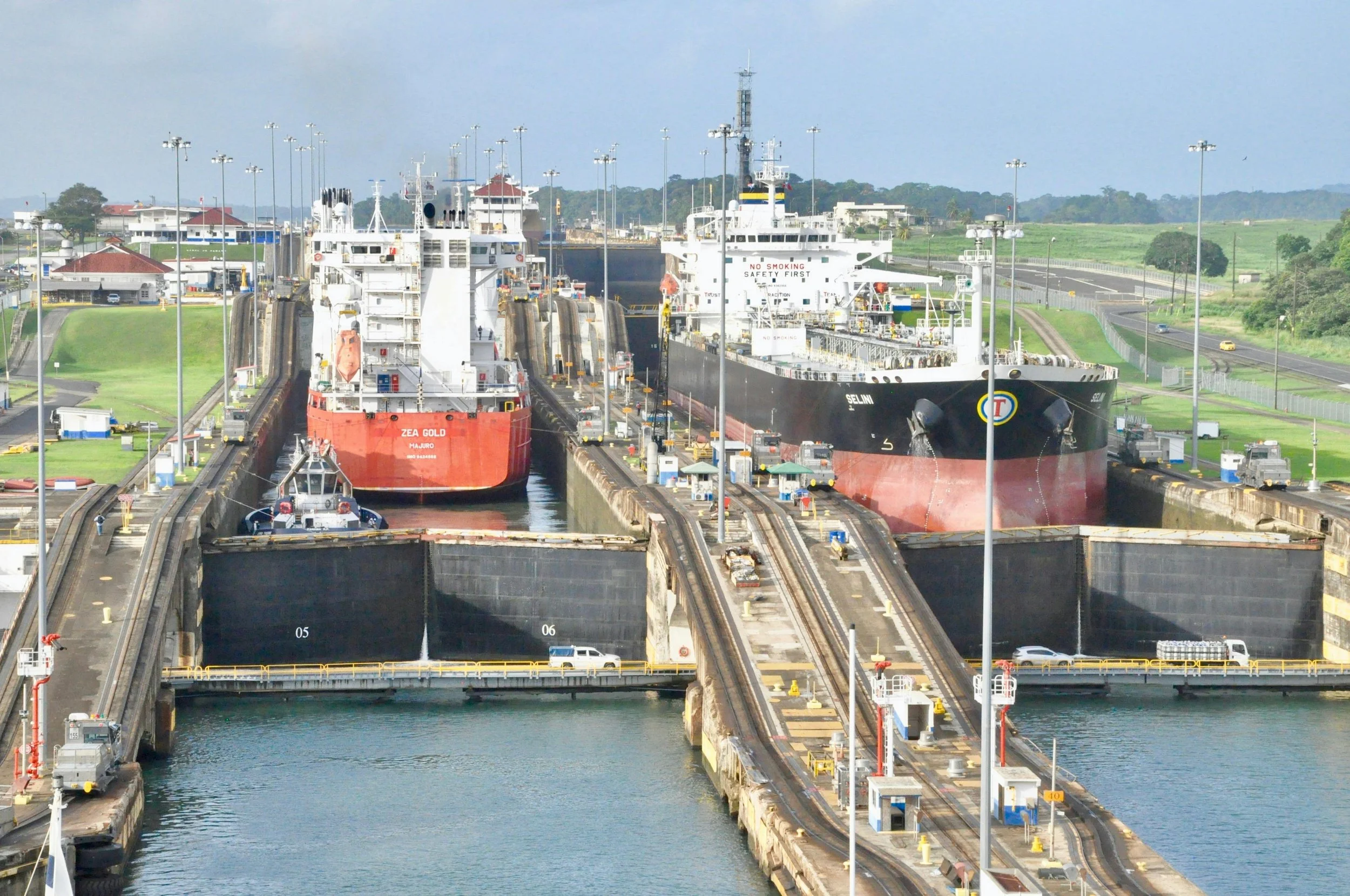
The dispute highlights the importance of the ports themselves. The canal is a vital artery of global commerce. Massive container vessels from Asia, Europe, and the United States pass through the canal each day, unloading cargo at logistics hubs such as Balboa and Cristóbal before containers are redistributed across regional shipping networks. The two ports together account for roughly 39% of Panama’s container traffic and employ thousands of workers. More broadly, the canal handles more than 5% of global maritime trade and about 40% of US container traffic, making the stability of its surrounding infrastructure a matter of international concern. While these figures underscore the canal’s global importance, the takeover also carries immediate domestic consequences for Panama itself.
National Impact For Panama
For the Panamanian government, reclaiming control over the ports is framed as an assertion of sovereignty over critical infrastructure. Officials argue that the court’s ruling reflects the need to ensure transparency and accountability in contracts governing national assets. The takeover may also bring financial benefits in the short term. The government estimates that operating the two ports during the transitional period could generate up to $100 million in revenue over the next 18 months – substantially more than the income generated under the previous concession arrangement.
However, the dispute poses some economic and legal risks. The arbitration proceedings launched by PPC could result in significant compensation claims against the Panamanian state. If the country ultimately loses the legal battle, the financial burden could fall on public finances. The situation also raises questions about Panama’s reputation as a destination for foreign investment. Critics of the takeover argue that abruptly cancelling a decades-long concession and conducting raids on company offices could undermine investor confidence in the country’s regulatory environment.
For workers and local communities in Panama, the immediate concern is employment stability. The government has pledged that no jobs will be lost during the transition, guaranteeing the positions of thousands of employees at the terminals while temporary operators oversee daily operations. The dispute also forms part of a wider debate within Panama about how to manage the country’s most valuable strategic asset. The canal generates significant national revenue – accounting for roughly 4% of Panama’s GDP – and serves as the backbone of the country’s logistics-driven economy. Balancing foreign investment, domestic control, and geopolitical pressure has therefore become a central challenge for policymakers in Panama.
Great Power Competition In The Panama Canal
It is difficult to separate the legal episode from the broader geopolitical rivalry between the United States and China. For decades, Panama has attempted to balance economic relations with both powers. The United States remains the country’s largest investor and trade partner, while China has become a major commercial counterpart and an important source of infrastructure financing across Latin America.
China’s economic presence in Panama expanded significantly after the country established diplomatic relations with Beijing in 2017 and joined China’s Belt and Road Initiative. Chinese investment in logistics, shipping, and port infrastructure in the region grew steadily during this period. For Washington, however, the presence of Chinese-linked firms near the canal has increasingly been viewed as a source of concern, given the waterway’s strategic importance.
Against this backdrop, some analysts interpret the dispute over the canal’s port concessions has been interpreted as part of a broader US effort to reduce Chinese influence in the Western Hemisphere. Accordingly, some observers frame the current administration’s regional policy as a reinterpretation of the Monroe Doctrine, sometimes referred to as the “Donroe Doctrine.” The concept refers to the second Trump administration’s effort to reassert U.S. dominance in the Western Hemisphere, outlined in the 2025 National Security Strategy as a corollary to the Monroe Doctrine and emphasizing hemispheric security under an America First approach. This framework emphasizes U.S. strategic dominance in the Americas, while countering external powers such as China and Russia. President Donald Trump has repeatedly highlighted the canal’s historical significance to the United States.
Built in the early 20th century, the canal remained under American administration for decades before being transferred to Panama under the 1977 Torrijos-Carter Treaties and fully handed over in 2000. Although the treaties established Panama’s sovereignty over the waterway, they also enabled the United States to defend the canal’s neutrality. This lingering strategic role has contributed to the Trump administration’s continued interest in developments surrounding the canal.
Recent diplomatic developments further illustrate the shifting alignment, as the Panamanian government has strengthened ties with the United States – this includes signing a security agreement in 2025 and withdrawing from China’s Belt and Road Initiative. At the same time, the Trump administration has encouraged greater economic and security cooperation with Panama. Within this context, the removal of a Chinese-linked port operator can be interpreted as part of a broader realignment of the canal’s surrounding infrastructure toward Western-aligned logistics networks. The outcome is not without risk. China has become an increasingly important trade partner across Latin America, and Beijing could respond to perceived pressure on its companies by applying diplomatic pressure and reducing investment.
For Panama, the takeover represents an attempt to assert legal authority and potentially capture greater economic value from the canal’s surrounding infrastructure. For the United States and China, however, the episode forms part of a broader strategic contest for influence over global trade routes. The canal has long symbolized the intersection of commerce, sovereignty, and power politics. The events of 2026 suggest that this dynamic may be entering a new and ever more contested phase.