
In America: United States A Part Of International Environmental Crime Enforcement Operation
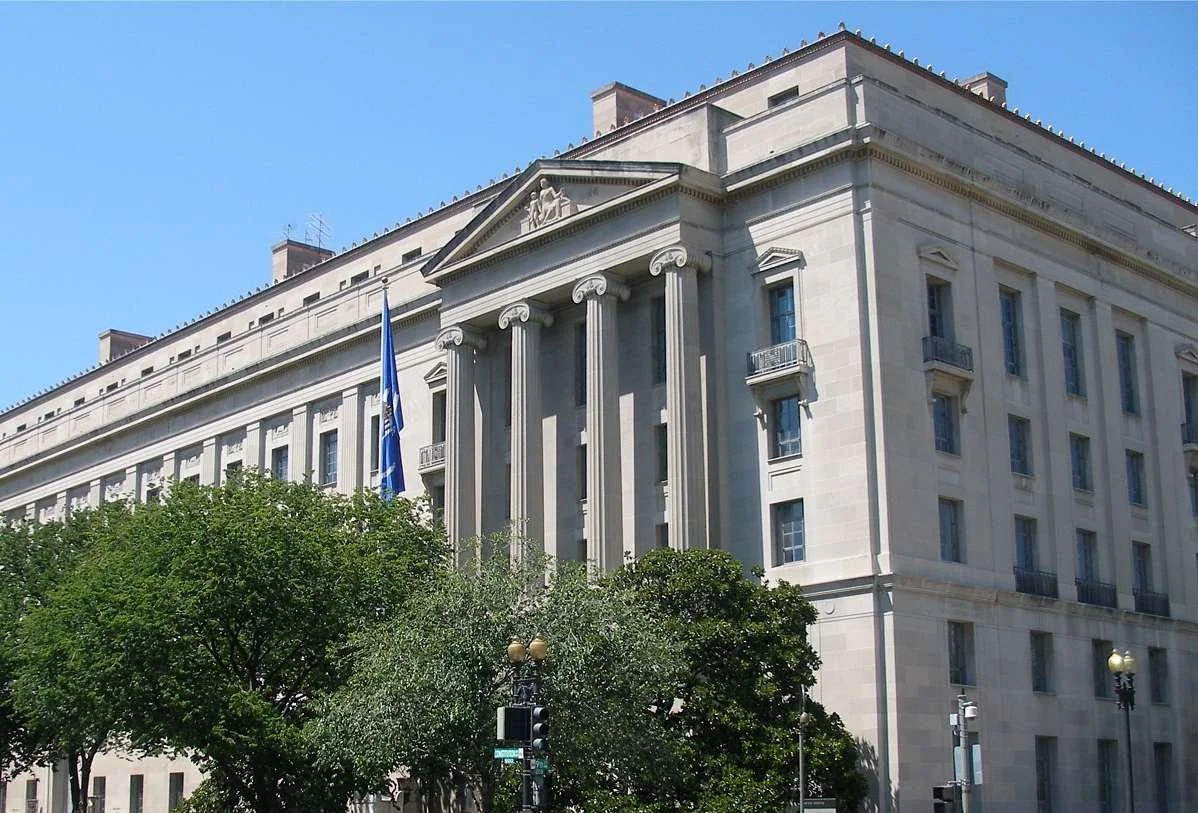
Recently, the Department of Justice discussed its contribution to a year-long international environmental crime operation. Operation “Custos Viridis” (latin for Green Guardian), was a 2025 global operation involving 71 countries within five continents. Environmental crime is considered one of the fastest-growing criminal sectors globally. The operation reflects a growing global focus on environmental crime as a serious threat to public health, ecosystems, and international security.
Contributors Of Operation Custos Viridis
The operation began with the International Criminal Police Organization (INTERPOL) and the World Customs Organization (WCO). INTERPOL is an organization networking governments and law enforcement agencies to handle issues that arise beyond a single country’s borders. The WCO is a global organization of customs administrations that cooperate to facilitate trade. The operation followed global alarms raised about organized environmental crime. This operation was characterized as the largest global operation ever to address pollution and waste crimes.
The United States contributed to the operation through numerous organizations including the Justice Department’s Environment and Natural Resources Division, the Environmental Protection Agency, the Department of Homeland Security, and the U.S. Customs and Border Protection. The U.S. coordinated inspections with foreign law enforcement of countries both bordering the U.S. and overseas in the operation. Through shared intelligence and international cooperation, thousands of inspections were conducted at ports, airports, and border crossings worldwide. The U.S. primarily focused its efforts on the southern border where transnational security threats were predominant.
Enforcement Outcomes
The Justice Department stated that “the United States focused on securing the southern border by targeting individuals and organized crime that sought to smuggle hydrofluorocarbons (HFCs), a type of fluorinated gas (FGas), and dangerous illegal pesticides into the country. The government’s efforts also combatted the sale and use of these illegal pesticides and illicit marijuana grows across the country.”
FGas is a category of synthetically-made industrial chemicals which are considered harmful to the environment. The group of man-made chemicals includes HFCs, Perfluorocarbons (PFCs), Sulfur Hexafluoride, and Nitrogen Trifluoride. HFCs are used in products and appliances like air conditioning and refrigeration, fire suppression, solvents, foam blowing, and aerosols. Over time, they have been developed to replace products using ozone-depleting substances (ODS) which have significant environmental impacts. The transition to HFCs is a part of an effort to reduce the environmental impact that common products and appliances have. Despite being a replacement of ODS, the EPA explains that HFCs have global warming potentials (GWPs), a measure of the relative climatic impact of greenhouse gases. Many HFCs trap hundreds to thousands of times more heat than that of carbon dioxide and do not deplete the stratospheric ozone layer. According to the EPA, HFCs are extremely powerful and can have health and environmental impacts, like increasing the possibility of severe weather events such as floods, wildfires, and drought. The illegal market financially thrives on selling HFCs when legal products are expensive or limited in supply due to regulations or restrictions.
Illegal pesticides have been identified as being highly toxic and linked to causing serious health issues. Risks include cancer, long-term illnesses, poisoning, neurological disorders, respiratory problems, and more.
The operation aimed to significantly disrupt criminal networks engaged in environmental crimes. Arrests and criminal investigations targeted illegal waste trafficking, wildlife crime, money laundering, tax evasion, corruption, fraud and document falsification tied to environmental shipment, and pollution offenses. Seizures found hazardous waste, e-waste, plastics, metals, chemicals, and illegally traded wildlife products. In the United States, the operation resulted in 21 arrests where defendants were ordered to pay more than $4.2 million in restitution and $2.2 million in forfeitures and the seizure of 1,484 pounds of FGas, over 40 pounds and six gallons of pesticides, 130 vehicles, heavy machinery, firearms, apartments, and companies. Inspections revealed that crime networks attempted to smuggle and conceal their environmental crimes through mislabeling the hazardous materials, having fake or incomplete shipping documents, or disguising waste as recyclable goods. Further inspections will need to emphasize investigating waste exporters, shipping companies, and brokers.
Globally, investigations included 1,048 inspections leading to the arrest of 337 individuals. In these inspections, seizures included 127,149 tons of waste, 602 tons of polluting agents, including 398 tons of FGas, 75 tons of plant protection products, 2.3 tons of mercury, and over $10 million in cash and bank accounts that directly came from proceeds of environmental crimes. The Justice Department estimated the value of the seized items to be anywhere from $53 to $59 million.
The Department of Justice has followed a global theme identifying environmental crime as a serious international criminal enterprise. The DOJ stated that "the enforcement actions helped protect society and the environment from serious risks." Operation Custos Viridis emphasized that environmental crime is not a “soft” offense and is considered a global threat to public health, marine and terrestrial ecosystems, and recycling/waste industries.
