
Latin Analysis: A Rising Number Of Brazilians Are Relocating To Paraguay Over Taxes and Political Dissatisfaction
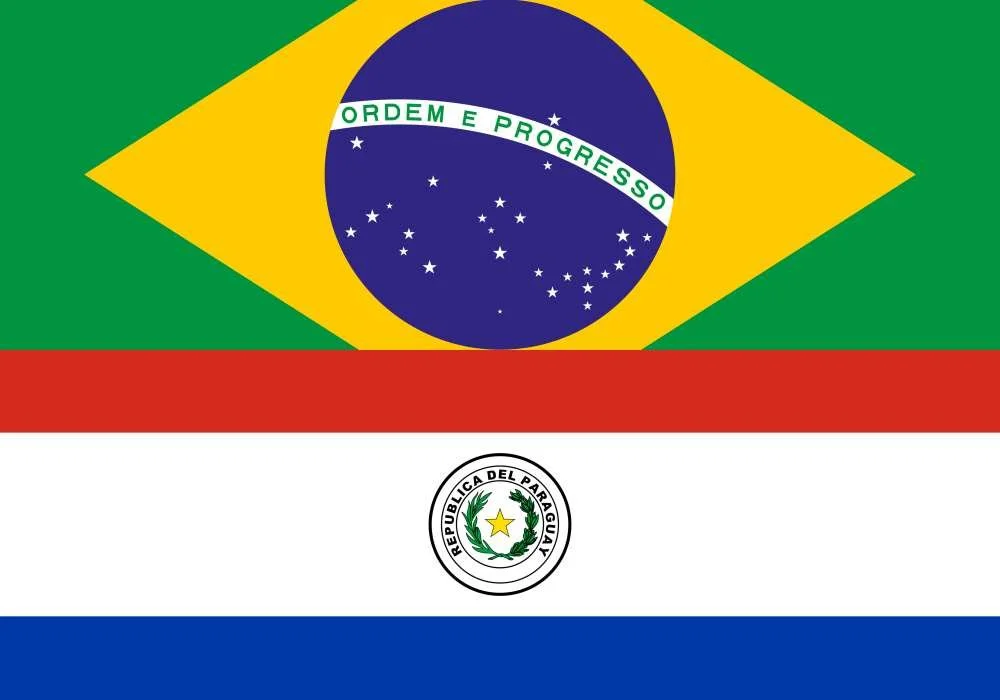
Brazilians are relocating to Paraguay in record numbers, drawn by a lower tax burden and a government whose ideology aligns more closely with their own. The trend accelerated sharply in 2025, continuing into 2026, and is reshaping the demographics of the country's border regions. It speaks to the pressures bearing down on a significant segment of Brazilian society – but it is also a story about Paraguay, a small and historically overlooked economy that has been actively positioning itself as a destination for a new wave of regionally mobile, ideologically motivated migrants.
The Scale And Profile Of The Migratory Movement
The numbers became noticeable in 2025. Paraguay granted a record of 40,600 residence permits that year, with Brazilians accounting for more than half. This was far ahead of the next largest group, which was Argentinians at 4,300 residence permits. The pace accelerated into 2026, when 9,200 authorizations were issued to Brazilians in the first three months of the year alone, a 79% increase on the same period a year earlier. The Paraguayan government has responded to the increase through its Migramovil initiative, launched in 2025, which consolidates immigration, police, and other agencies at joint processing fairs. By March 2026, the government had planned 19 fairs across the country for the year.
The profile of applicants has also shifted. Two years ago, 80% of applicants in the Alto Paraná department were medical students seeking cheaper university access. The head of immigration for the department, Cornelio Melgarejo, said that entrepreneurs and retirees now dominate, seeking more economic and political stability. Data from 2025 similarly shows a rise in applications from remote professionals, investors, and families hoping for Paraguay to become a long-term base. Paraguayan authorities have framed the inflow as evidence of the country's economic competitiveness and have introduced further tax incentives to attract foreign capital and businesses.
BBC Brasil reported from one such residency fair in Ciudad del Este, speaking to applicants from across Brazil, who largely cited two overlapping motivations: dissatisfaction with Lula’s government and the pursuit of lower taxes and cost of living. Paraguay’s total tax burden sits at approximately 14.5% of GDP, according to OECD data, compared with Brazil at 32% of GDP. Paraguay also applies a flat 10% rate across its three main taxes: VAT, income tax, and corporate income tax. To compare, Brazil’s income tax ranges from 7.5% to 27.5% for individuals, while corporate tax starts at 15% with an additional 10% surcharge above a monthly profit threshold. Moreover, Brazil’s planned unified VAT, approved in the 2023 tax reform, is projected at 25-28% when fully implemented in 2033. Accordingly, Melgarejo has affirmed that the most common reason applicants give for wanting to relocate is the cost of Brazilian taxes.
Also at play is an ideological dimension, where the applicants interviewed by BBC Brasil framed their decision in political as well as economic terms, often saying their values mismatch with the current Brazilian government. This narrative is reinforced by social media, where Brazilian influencers based in or travelling to Paraguay produce videos emphasizing the country’s lower tax burden and conservative governance.
Political Context and Regional Patterns
This evolving migration pattern is partially rooted in the political contrast between the two countries. Paraguay’s current president, Santiago Peña, is the ninth right-wing leader since the end of General Alfredo Stroessner’s dictatorship in 1989. In March 2026, Peña signed an agreement with the Trump administration authorizing the presence of American military personnel in the country to combat organized crime, reflecting a broader conservative geopolitical orientation. Peña’s government has actively promoted the migration inflow, framing the arrival of foreign residents as a signal of strong international confidence in Paraguay’s economy.
Brazil’s emigration patterns more broadly have mirrored periods of political polarization and economic instability, particularly since 2014. Mercosur residency agreements have made Paraguay – along with Argentina and Uruguay – a legally accessible destination for Brazilians. The flow into Paraguay, however, is not exclusively Brazilian. Argentinians are the second-largest group in Paraguay's 2025 residency figures, and Europeans from Germany, Spain, the Netherlands, and France also appear prominently, suggesting the country's appeal extends beyond Brazilian political grievances to include its simplified migration procedures and competitive tax environment.
However, some analysts point to the structural caveats to the Paraguayan model. A lower tax base constrains public expenditure on infrastructure, health, and education. The share of informal labour in Paraguay stands at 62.5%, compared with 37.5% in Brazil, while extreme poverty is at 4.1%, above Brazil's 3.5%. One economist noted that some Brazilian migrants continue to cross back into Brazil to make use of its public health system when needed. The permanence of the trend is also uncertain: of the 23,500 residencies granted to Brazilians in 2025, only 19% were permanent, down from 68% in 2020. Some who have made the move even acknowledge the reality has not matched expectations propagated by social media – a 22-year-old vendor interviewed by MercoPress said: “People hyped it up too much online.”
The uptick in Brazilians relocating to Paraguay reflects a combination of economic incentives and political dissatisfaction within a polarised Brazilian electorate. Regional mobility frameworks and social media have lowered the informational and logistical barriers to the move. However, the potential limitations of Paraguay’s low-tax model and the gap between online portrayals and on-the-ground realities suggest the picture is more complex than what the volume of applications alone implies.