
In America: May Day Protests Past and Present
May 1st is celebrated globally as International Workers’ Day, otherwise known as May Day. Despite its origins in the United States, most people in the US know very little about May Day and its ongoing impact.
Origins and History of May Day
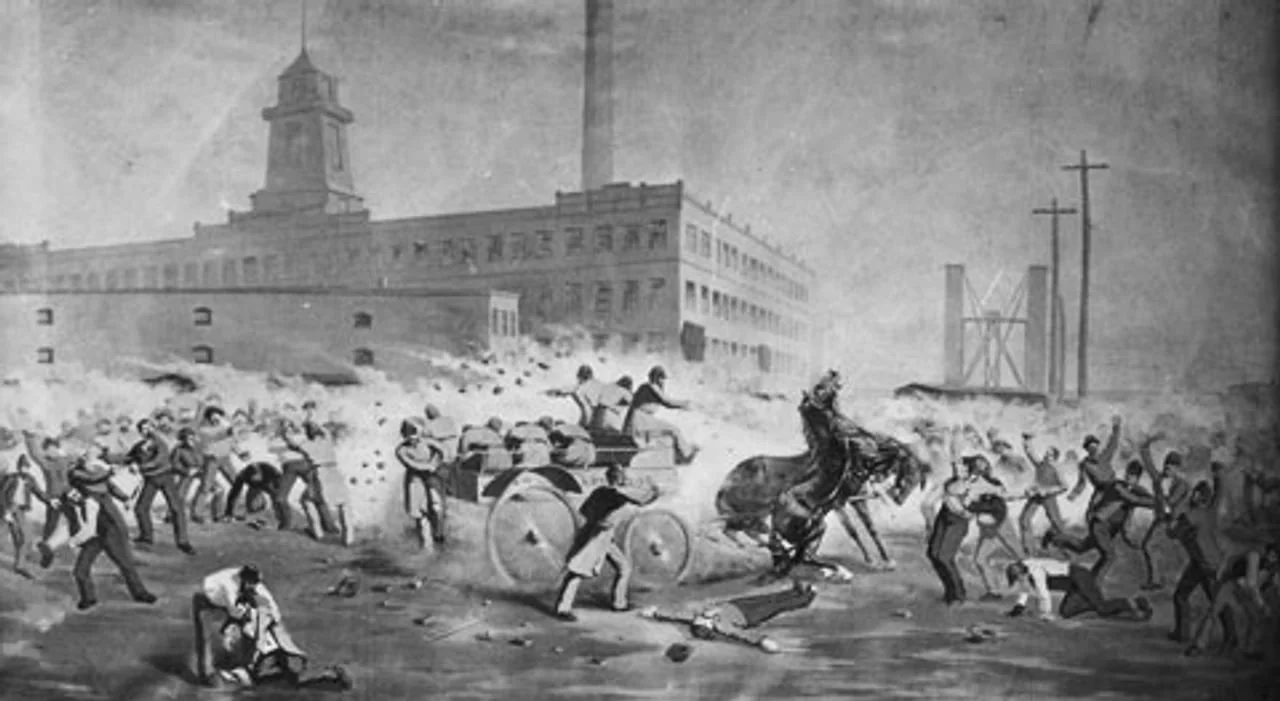
May Day stems from the May 1st, 1886, demonstrations, where over 300,000 workers across the nation walked off the job, demanding better working conditions and an 8-hour workday, and promoting the ideals of socialism. These demonstrations culminated in Chicago, where numerous speeches and demonstrations inspired continued peaceful action for the next two days.
However, on May 3rd, 1886, demonstrations at Chicago’s McCormick Reaper Works turned violent between local police and protestors. At least two strikers were killed in the turmoil, and their deaths would inspire a public meeting to be held the next day in Haymarket Square.
The Haymarket Square rally would turn deadly when an unknown person threw a bomb at the police, sparking further chaos and violence. This event would later become known as the Haymarket Massacre or Haymarket Affair, which shocked the labor movement across the country.
The aftermath of this event saw 8 men arrested and convicted for murder. Their convictions were decided under dubious evidence presented to the courts, and the convicted men largely became martyrs for the broader socialist and labor movement across the nation. Some historians would label this event as an inquisition that sought to weed out and destroy the roots of labor activism in the US.
Over 100 years later, the US still does not recognize May Day as a holiday despite its origins in this country. Rather, the US celebrates Labor Day on September 7th.
So why does the US celebrate Labor Day on September 7th rather than the internationally recognized May Day?
Prior to the Haymarket Affair, workers in the US organized the country’s first unofficial Labor Day parade in New York City on September 5th, 1882. This celebration unofficially caught on with other US cities until the Haymarket Affair in 1886. The Haymarket Affair would be memorialized by an international gathering of socialists in Paris in 1889 as International Workers’ Day.
With these two competing dates for Labor Day in the US, former President Grover Cleveland needed to pick one as a federally recognized holiday. The association of anarchists, communists, and socialists among the labor movement at the time of the Haymarket Affair disgruntled US politicians and influenced President Cleveland to make the first Sunday of September as the federally recognized holiday for Labor Day.
To this day, May Day protests in the US are continually criticized for its associations with anarchists, communists, and socialists despite May Day’s recognition among 80 other countries.
May Day Today
Nationwide demonstrations were organized under the May Day Strong coalition, touting the slogan: “No School. No Work. No Shopping,” in protest of the perception that the government prioritizes billionaires over workers. These demonstrations were inspired by the economic blackout staged in Minnesota following massive ICE operations in the state. Additionally, the May Day Strong coalition follows in the footsteps of the No Kings protests throughout this past year.
Neidi Dominguez, a founding director of Organized Power in Numbers and a May Day protest organizer, commented on the inspirations drawn from Minnesota:
“We’re really trying to actually start organizing people to see that the power that we collectively have to do economic disruption is really the power that we need in this moment to not just defend ourselves, but defend democracy.”
More broadly, the stated demands of the May Day Strong coalition are:
“That we tax the rich so our families, not their fortunes, come first, No ICE. No war. No private army serving authoritarian power. Expand democracy. Hands off our vote.”
Pedro Trujillo, an organizer from the Coalition of Humane Immigrant Rights, offered insights about the growing network of organizations and protestors throughout the Trump administration:
“That goes to show that people are ready to get active. They’re ready to get connected with other networks, and we’re seeing folks from other sectors as well join, which is something similar that we’ve seen in like marches, like the No Kings marches, you get some folks who are unlikely marchers, folks who are even elderly, they’re out there demonstrating as well, because they’re tired of what they’re hearing about in the news and seeing in their streets.”
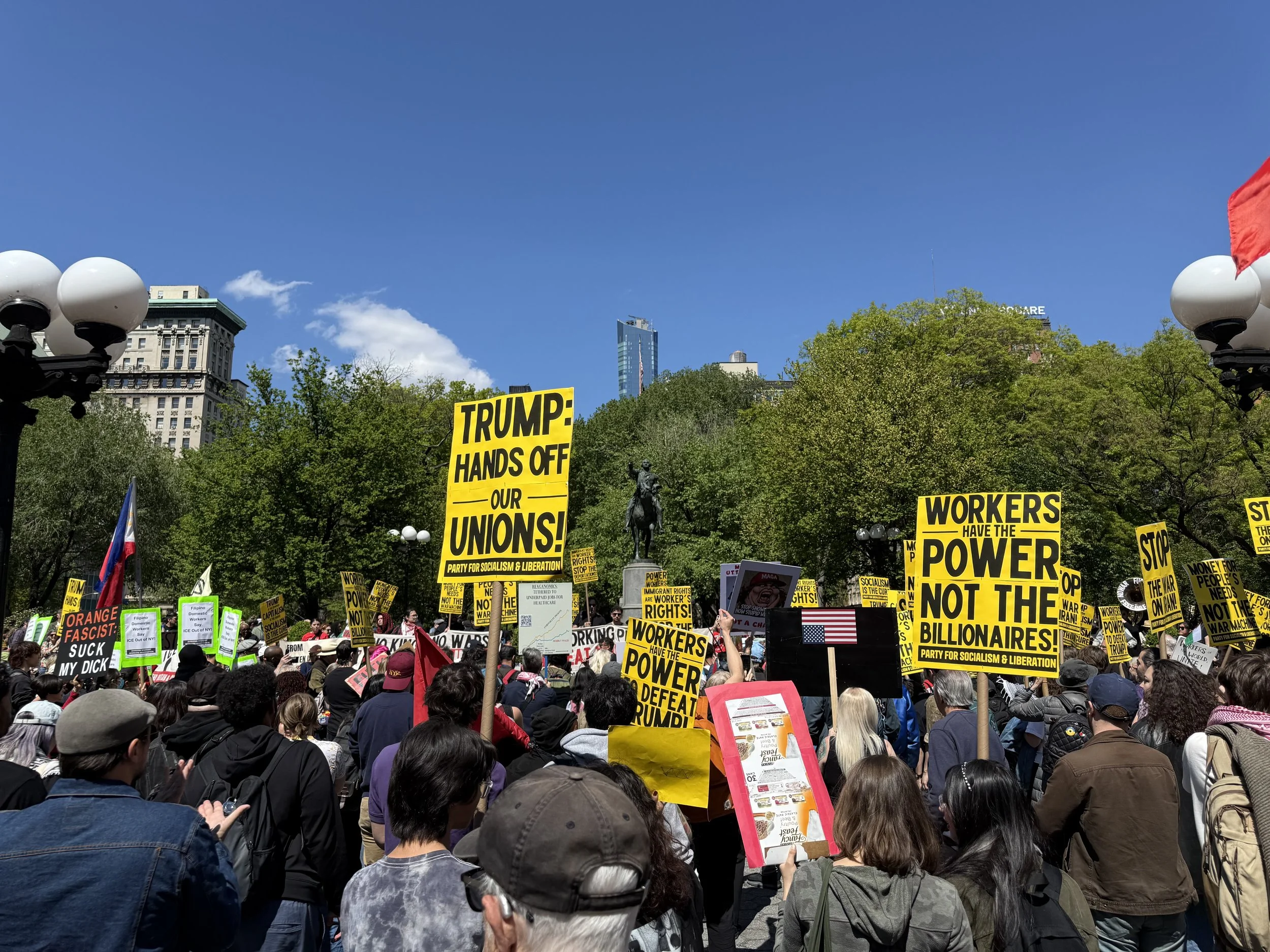
May Day Rally at Union Square in New York City
Opposition to the May Day Protests cites concerns over school closures and ideological criticism of extremist ideologies entangled within the May Day Strong coalition. Senator John Fetterman, a Democrat from Pennsylvania, criticized the movement:
"These kinds of protests are being funded by billionaires against billionaires. I don't know if they realize the irony in many of those things right now."
Wisconsin Moms for Liberty activist Scarlett Johnson also criticized the movement for closing down schools:
"They are not just indoctrinating the kids in the classroom. They are encouraging, actively, for students to leave the classroom and go march in the streets with teachers, with administrators.”
More broadly, opposition to the May Day Strong coalition has focused its critiques on the extremist ideological leanings of the movement, the detrimental effects of school closures and walkouts, and ignoring the protests altogether. These criticisms reflect some of the initial critiques of the Haymarket Affair when US politicians were deciding which day to make the federally recognized Labor Day.
Overall, the May Day Strong coalition continues the legacy left by the Haymarket Affair while advocating for similar yet different causes related to labor rights and uplifting workers’ agency. The broader aims of the coalition highlight the need for greater awareness of the history of May Day and to rally further support for their agenda. Ultimately, the May Day Strong coalition continues the fight for stronger labor rights and related causes that demand greater attention from the American public and politics.