
Middle East: Fears Trickle Throughout Oman Over Water Scarcity
For over 50 years, Oman has been facing a serious water crisis. The nation’s main water demand used to be strictly agriculture-based. But as the population has increased by 698% since 1970, and the advent and development demands of AI persist, the use and need for water becomes ever more strenuous in Oman.
Water Demand in Oman
Oman's current irrigation system is based on the ancient aflaj network, a system designed to harvest and distribute millions year old groundwater from the arid mountains. The “Daudi” form of aflaj entails digging long underground tunnels that tap into deep aquifers, utilizing gravity to transport the water from the mountains. The “Ghaili” method is more common, and entails collecting water from the base flow of ephemeral riverbeds; however, this method is also most susceptible to drought.
![A typical cross section of a daudi (close-tunnel) falaj type [adapted from Megdiche-Kharrat et al. (2017)]](https://www.researchgate.net/publication/366595178/figure/fig1/AS:11431281120018808@1676348961350/A-typical-cross-section-of-a-daudi-close-tunnel-falaj-type-adapted-from.png)
Water is divided among users based on time shares rather than volume, meaning users purchase the timed flow of water, rather than a specific amount of volume. Each system is managed by a Wakil (Arabic for “to entrust/appoint/delegate”), who acts as a custodian: Wakils oversee the distribution, general upkeep, fee collection, and dispute resolution. The average channel feeds a multi-layered agriculture system for water efficiency and heat management. Date palms absorb all of the heat at the top, while fruit trees such as bananas and citrus’ are planted in the middle, and fodder crops grow at ground level. This system reduces temperatures by 15 degrees Celsius, keeping evaporation to a minimum.
Despite its sustainability for over 5,000 years, the aflaj system now faces several modern threats. High-capacity diesel and electric pumps’ introduction into the gulf region has allowed farmers to bypass traditional gravity-fed systems. Aggressive pumping, however, is depleting aquifers faster than they can recharge, leading to a sharp decline in flow for30% of aflaj and causing 27% to stop flowing entirely.
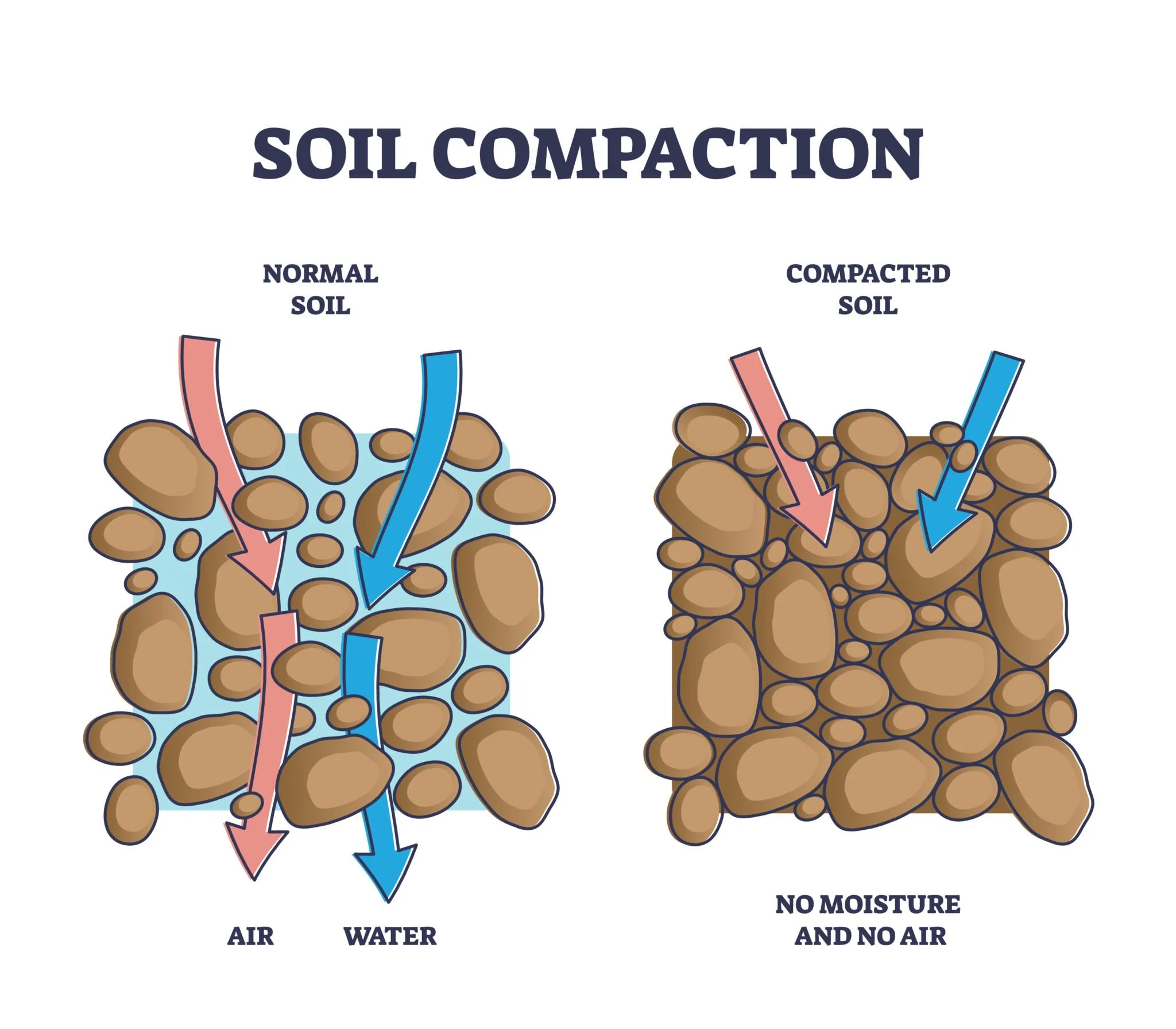
As previously mentioned, Oman’s water resources are also under pressure from a rapidly increasing population. Oman’s population is projected to double to 9.2 million by the mid-century, and rapid urbanization is physically conflicting with existing water networks. Cities like Nizwa and Ibri often ignore traditional harim (protection zones) surrounding aflaj mother wells and channels. In Nizwa, 115 out of 134 aflaj are at high risk of drying out due to city expansion. Expanding urban centers lead to soil compaction, leaving no pockets of water or air in the ground, which decreases groundwater recharge.
Furthermore, subterranean channels are increasingly exposed to pollution from sewage and urban runoff as cities grow closer to mother wells. It doesn't help that younger generations migrate to urban public-sector jobs, creating a shortage of the local expertise required to maintain complex subterranean tunnels. Farmers now rely on expatriate laborers who lack traditional management knowledge, leading to a decline in the system's efficiency.
To address these new concerns, Oman has begun relying on seawater desalination plants to meet its freshwater needs. Currently, there are100 desalination plants in operation throughout the country, These facilities provide over 80% of Oman's drinking water supply and account for approximately 15% of its total annual water usage.
Oman’s drastic shift from being a rural-agrarian society to an urban-industrial state has compromised the economic self-sufficiency of the aflaj. Historically, the aflaj was self-financed through water auctions, where people would buy their “water time.”
Modern research shows these periodic auctions often result in prices below the marginal value of the water, failing to generate sufficient funds for high-cost modern maintenance. The high cost associated with both falaj (singular for aflaj) maintenance and deep-well pumping mean that Omani-irrigated crops often struggle to compete economically with cheaper imported goods.
And in this turning tide of new age technology, investment in artificial intelligence and high-performance data centers introduces a new challenge to the nation's existing water security crisis. The Sultanate has committed significant capital to establish itself as a regional technological hub, garnering over$169 million in investments. Key projects like theOman Digital Triangle Initiative, aims to create three interconnected zones for cloud computing and AI, supported by advanced submarine cables and “green data centers”.
The Omani government has established the National Centre for Space, AI and Advanced Technologies and the Green AI Alliance to promote sustainable digital growth. Through the Oman Investment Authority, the state is investing in cutting-edge technology like optical chips (viaSalience Labs), which use light photons instead of electricity to transmit and process data, reducing power consumption and thermal levels.
The expansion of these digital facilities has cultivated a connection between water, energy and technology that threatens water distribution in several ways. Data centers generate immense heat and require constant cooling to function. In Oman's arid climate where summer temperatures can exceed 50 degrees Celsius, the volume of water required for thermal management is substantial. Running these centers requires enormous amounts of electricity, and in Oman, electricity generation and water production are linked. As Oman is dependent on desalination plants, increased electricity demand for data centers may require more power plants, which in turn require more water for cooling and operations. Desalination is itself very energy-intensive. Relying on it to provide the water needed to cool the data centers creates a feedback loop that adds strain to the energy sector. Moreover, the added water demand for AI ecosystems may create direct competition for resources with the agricultural sector, potentially increasing Oman's reliance on food imports as water is diverted from farms to digital infrastructure.
Complicating the issue is the fact that Oman is investing in AI to solve the very water problems it may worsen. The Oman Investment Authority has invested in firms like Gradient/Turing, which uses AI to optimize water desalination and wastewater treatment processes. By making water management predictive rather than reactive, AI could potentially increase the efficiency of the national water supply, helping offset its own high consumption footprint. Or, it could worsen to the feedback loop, leaving Oman thirsty for a new solution.
