
Far East: The Silent Struggle of Japan’s Net Café Refugees
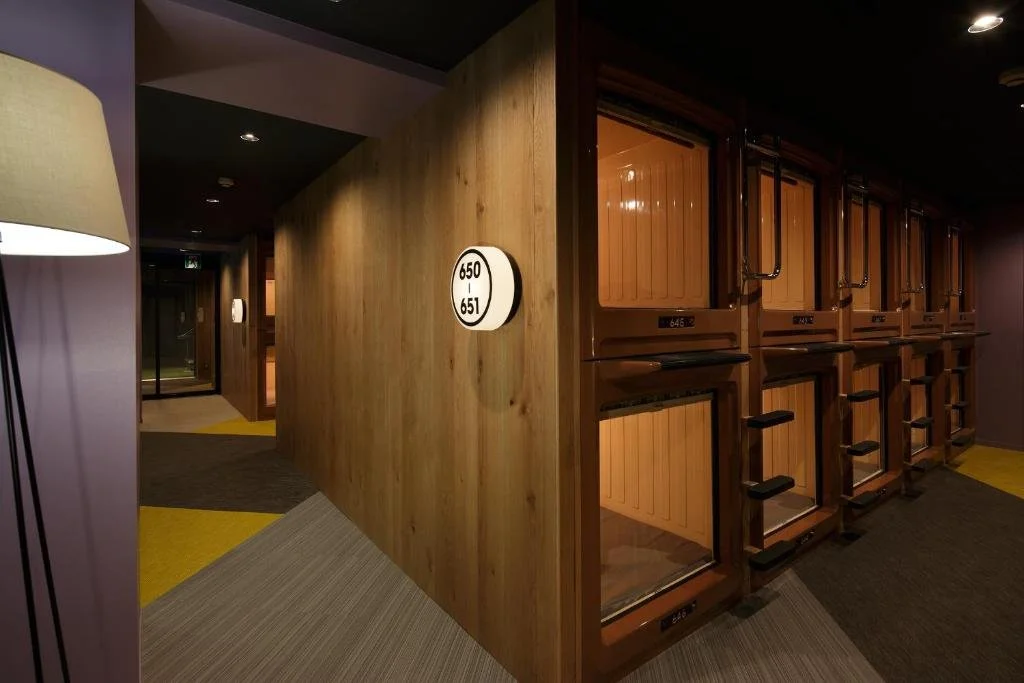
Japan’s official homelessness figure – just 2,591 people according to the Ministry of Health, Labor and Welfare’s 2025 nationwide survey – represents an extremely small share of the country’s population of roughly 125 million, which dramatically under-represents the scale of housing insecurity in the country. At the same time, the statistics raise questions about how such an exact figure could be realistically captured based on the scale of the population.
According to OECD, for every annual count, the Japanese government only records individuals sleeping outdoors in locations such as parks, riversides, roadsides, and station buildings as “homeless”. The statistics exclude those who also don’t have a fixed residence and stay most nights in internet cafés or other temporary locations.
In recent years, an overlooked population known as “net café refugees” has drawn attention from the public. “Net café refugees” are people who spend nights in 24-hour internet cafés, manga cafés, capsule hotels, or cars, because they cannot secure stable housing. A Tokyo Metropolitan Government survey estimated that around 4,000 people in Tokyo alone rely on internet cafés as an overnight shelter, not mentioning other cities in Japan.
Many in this population work low-wage or irregular jobs, as delivery drivers, cleaners, convenience store employees, or warehouse workers, while others are jobless. In Tokyo, where rent is especially high compared to other areas in Japan, saving for traditional housing is almost impossible due to their low wages and irregular working hours.
Japan’s Net Cafe Culture
Nowadays, Japanese internet café (ネットカフェ, netto kafe) or net café is characterized by its convenience, cheap price range, and 24/7 working hours. The first manga cafés emerged in Japan in the 1970s as simple reading rooms for comic enthusiasts. However, with the rise of the internet and technology in the 1990s, the cafés evolved into spaces that integrated computers, games, and comics. The net café found in Japan today commonly has thousands of manga volumes organized by genre, high-speed internet terminals, and individual booths equipped with reclining chairs or mats.
Customers can not only read comics, use computers, and relax in private booths, but also take showers, order food, and have overnight stays. Oftentimes, a net café is the best location to stay at for those who miss the last train or even for travelers who need a cheap overnight stay.
Yet, a space once designed for entertainment and culture is now transforming into one for shelter, especially for those who are on the edge of society.
The “working poor”
According to the OECD, in Japan, the richest 20% earn about five to six times more than the poorest 20% and one in six people live in relative poverty.
Japan is known for its low unemployment rate, with one of the lowest rates among developed countries. The most up-to-date data in 2023 shows a rate around 2-3%. However, the low unemployment rate does not necessarily mean economic security, as many jobs are low-paid or non-regular employment. A major issue in Japan is called “labor market dualism”. The term refers to an economic phenomenon where the economy is divided into two distinct sectors: a primary sector with high-wage, secure, and advancement-oriented jobs, and a secondary sector featuring low-wage, insecure, and dead-end positions.
The second sector population has been increasing: most of them are non-regular employees who receive lower wages, fewer benefits, and less job security. Examples of non-regular workers are part-time workers, temporary workers, and contract workers.
Non-regular employees are not the only ones considered as the “working poor”. According to Japan’s Employment Status Survey, about 8.2% of regular employees earn incomes low enough to be classified as working poor, meaning their income falls below the poverty threshold. A significant sector of this population is single-parent households. Many of them are employed but still poor. Specifically, in 2026, the employment rate for single-parent households in Japan is around 86%. However, their poverty rate is about 44.5%.
This reality highlights a broader issue within Japan’s labor market: employment does not always guarantee economic stability. Despite relatively high employment rates, many workers are trapped in low-wage jobs and fragile life circumstances. The persistence of the working poor, particularly among vulnerable groups such as single-parent households, underscores the need to address wage inequality, job stability, and social support systems to reduce poverty and inequality in Japan.
Why Net Café Refugees Remain Unnoticed
Journalists characterize net café refugees as “blending in with metropolitan masses during the day and retreating to internet café cubicles at night”. They dress normally and commute to work normally, seemingly blending into the city life, while their life circumstances and the hidden issues behind are extremely overlooked.
In Japan, a proportion of homeless people avoid applying for welfare because it requires contacting family members and, at the same time acknowledging financial hardship, stemming from shame associated with poverty. Reports on internet café refugees indicate that many of them are unwilling to apply for welfare services, because they have a sense of self-shame in proving they have no family support. In the end, this hidden homelessness becomes a norm for many’s daily life.
In Japan, public assistance such as seikatsu hogo (livelihood protection) often requires preparation of extensive documentation and, more importantly, confirmation that applicants are unable to receive financial help from family members. As a result, individuals who have unstable employment but are not completely jobless may find themselves in a gap between work and welfare.
Low wages, irregular working hours, and high urban housing costs make it extremely difficult to save enough money for rental deposits or stable housing. For many net café refugees, they are trapped in a cycle of poverty. In this sense, their poverty is not simply the result of personal circumstances but also reflects structural barriers that restrict their access to economic mobility and long-term stability.