
Far East: When Photography Imagined Japan for the World
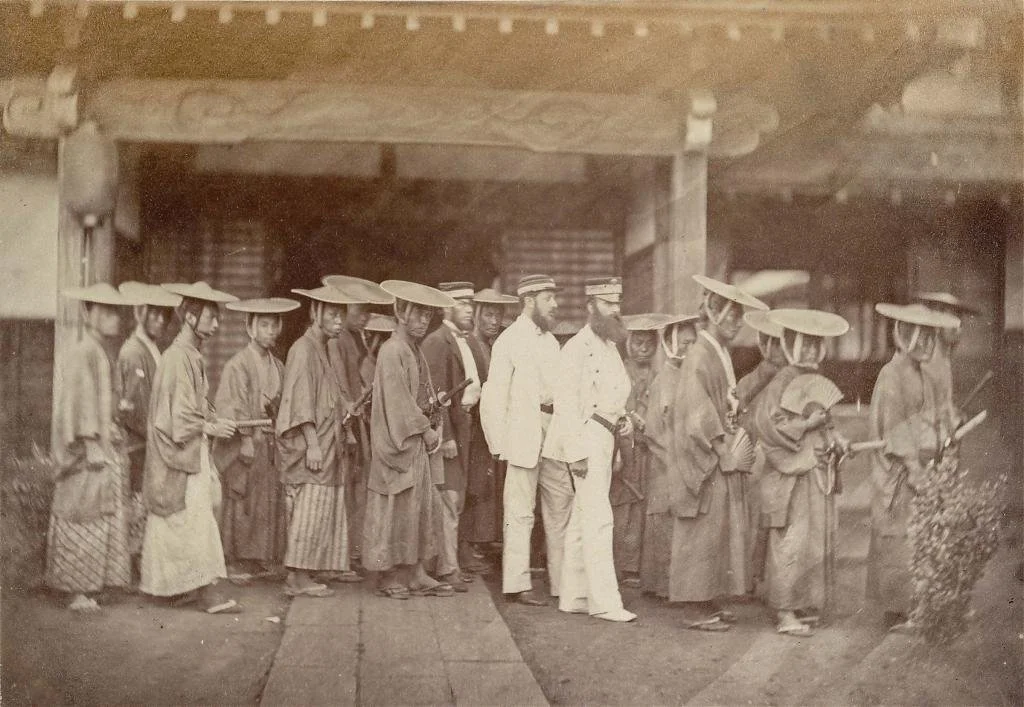
Felice Beato, collection of The National Maritime Museum, Amsterdam
The National Maritime Museum in Amsterdam is holding an exhibition titled Ekō – Japan In Two Visual Narratives from March 5, 2026 through August 30, 2026. Notably, the exhibition presents the works of the British-Italian photographer Felice Beato, in dialogue with modern artistic responses by photographer Anaïs López. Central to the exhibition is Beato’s role in shaping one of the earliest Western visual frameworks of Japan during the late Edo and early Meiji periods. The work reflects how Japan continues to be imagined in the Western world today.
The history of Dutch–Japanese contact makes Amsterdam a particularly fitting location for “Ekō – Japan in Two Visual Narratives.” Dating back to Japan’s period of national isolation during the Edo era, the Dutch began their trade relations with Japan at Dejima in Nagasaki. The Netherlands was Japan’s primary gateway to Europe for more than two centuries, facilitating the exchange of not only goods, but also knowledge, language, culture, and scientific ideas.
From the early 17th century until the mid-19th century, Japan maintained a policy of relative isolation known as “sakoku” (closed country). During this period, under the Tokugawa shogunate, all foreign contact was heavily restricted and trade was tightly controlled. Most Westerners were not allowed to enter the country, with limited exceptions including Dutch traders in Nagasaki. One of the important reasons for “sakoku” was Tokugawa’s determination to maintain political stability and firm control over Japan after a long period of civil war. The state was also concerned about the potential spread of Christianity, which they perceived as a threat to social order and government authority.
In the 1850s, when Japan finally opened trade,early photography captured this pivotal moment: a society in transition. Photography, in this case, became one of the primary ways in which Japan was introduced to the Western imagination.
Colors In Early Japan Photography
Hand-coloring, a technique that transformed monochrome photographs into vivid and emotionally engaging images, was the most striking and unique feature of early Japan photography. In the Ekō exhibition Ekō, one can see photographers such as Felice Beato use hand-coloring in their work. Beato often collaborated with Japanese artisans: the artisans carefully painted delicate colors onto albumen prints, while he shot the images. The rich reds and blues added to kimonos (traditional national dress of Japan), the delicate pinks to cherry blossoms, and deep blues to the sea and mountains all contributed to more than beautiful artwork — the photographers were presenting an image of Japan along with their wonder and sense of exoticism to this foreign and mysterious country. The photographs eventually came to symbolize romanticized ideas of a timeless Japan.
In a Stanford University study on photography and the construction of Japan’s image, the authors discuss how foreign understandings of Japanese identity and culture are significantly shaped by photography. One consequence is the idea of an “unchanging” Japan. Through films, music, tourism campaigns, and popular media, nostalgic imagery of Japan is often prioritized over the realities of contemporary Japanese life.
What Does The Real Japan Look Like?
Data showed that in 2024 alone, Japan welcomed approximately 36.87 million international visitors. In 2025, the figure jumped to 42.7 million. Destinations such as Kyoto remained among the most visited locations in the country. Specifically, anime-related tourism alone attracted an estimated 3 million foreign visitors in 2024. What has been dubbed “anime soft power” refers to how global audiences consistently associate Japan with aesthetic appeal through anime, fashion, and tourism branding.
A notable reality behind these statistics was overtourism in specific areas like Kyoto. In 2025, surveys found that 71.4% of Kyoto residents were troubled by crowding, 67% complained about overcrowded buses and subways, and 55% reported frustration with poor tourist behavior.
These figures also raise a deeper question: which Japan is being consumed and reproduced through global tourism and media narratives? Much of Japan’s global appeal today is shaped through visual narratives spread by anime, social media, films, and tourism branding. These representations of Japanese culture are not entirely false. Yet, to some extent, they simplify a far more complex contemporary society, composed by fascinating cultural layers such as indigenous culture like the Ainu, warrior culture, Japanese youth subcultures, and agricultural culture. At the same time, this curated cultural image of Japan contrasts sharply with contemporary realities marked by urban isolation, an aging population, intense work culture, economic uncertainty, and increasingly overcrowded cities. In many cases, anime soft power, for example, transforms Japan into an aesthetic experience rather than a lived reality.
In the end, to try to understand a culture and society, it is important to move beyond romanticized or fantasized images, as a culture cannot be fully grasped through idealized snapshots or curated narratives — it could be understood through its diversity, including everyday struggles, historical depth, and contemporary transformations. However, the artwork one can see today and the well-preserved historical traces in photography continue to serve as valuable windows into how Japan was seen, interpreted, and imagined across different periods.
In this sense, the exhibition Ekō – Japan in Two Visual Narratives succeeds in making this tension visible. The exhibition also became an invitation for the viewers to reflect on both the constructed nature of historical imagery and its lasting influence on contemporary perception. In other words, only by combining these historical visual records with a critical awareness of their limits can we begin to approach a more genuine understanding of Japan: as both an imagined construct and a lived reality.