
India Insights: A Ghost Town, What Does The Emptiness Of The Dhulagarh Market Mean Regarding Muslims In West Bengals
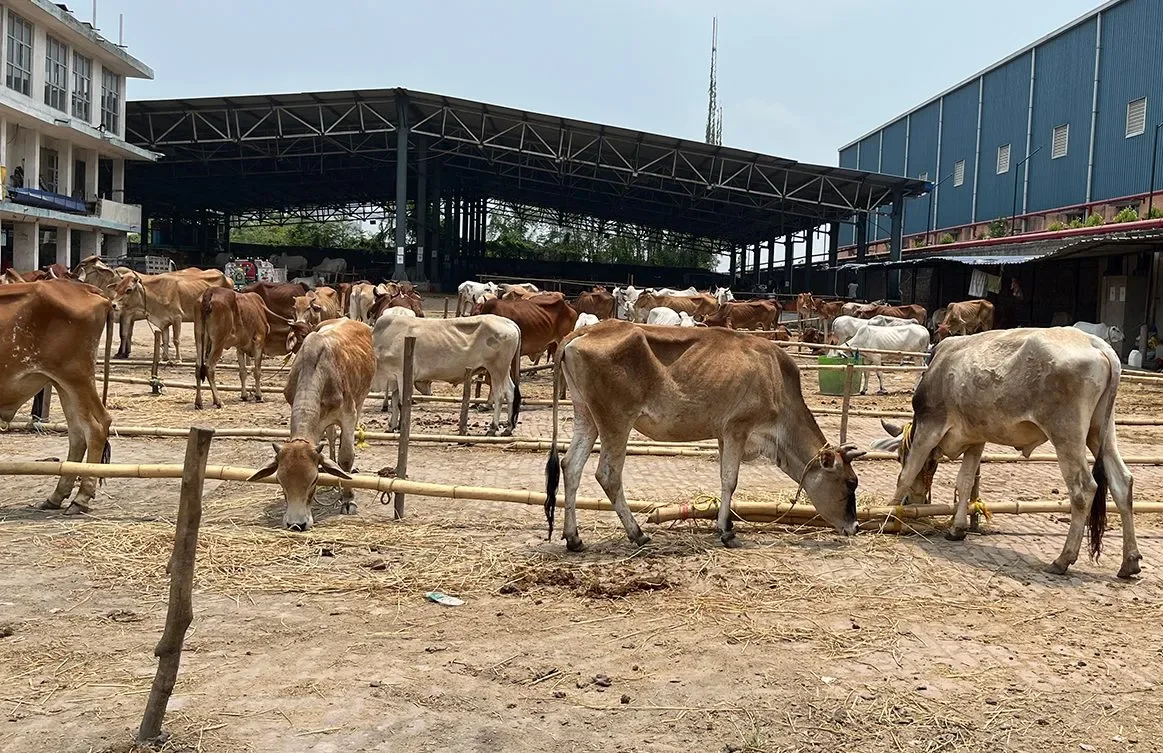
The cattle market Dhulagarh, on the outskirts of Kolkata in West Bengal, was accustomed to a heavy flux of consumers around Eid, given the large sum of Muslims that compose the population of the state. However, prior to this year’s Eid, the market was a ghost town; completely empty, without its usual clientele. One doesn’t need to be a political expert to comprehend what led to this, the right-wing party Bharatiya Janata Party (BJP) victory in West Bengal’s Legislative Assembly elections. Prime Minister Narendra Modi’s party is a notorious follower of the principle that India shall be a Hindu nation, adopting and establishing several controversial policies that remove the rights of Muslims within the nation. West Bengal was governed by All India Trinamool Congress (TMC) since 2011, after having defeated the Indian Communist Party, who ruled the state since the late 70s. The BJP had attempted time and time again to penetrate the politics of the state; however, it failed consecutively. Until May 6th, 2026, when it embraced the electoral victory with open arms.
This year’s Eid festivities can be summarised by one word: fear. Since BJP’s victory, over 25% of West Bengal’s population has been living under uncertainty, given the ruling party’s history with Islamophobia. The election period was marked by a fierce dispute between the TMC and BJP, as well as contentious developments against the Muslim population. Even before BJP’s win, anti-Muslim policies were already bleeding through the electoral and political systems. Throughout the campaign period, several people realised that they had been stripped of their voting rights, with no previous warning. The list published by the Election Commission of India (ECI) failed to include a large number of West Bengalis, and, funnily enough, 95% of those who lost voting rights were Muslims. The ECI defended its actions by claiming that the deleted names were duplicated or belonged to deceased individuals; however, reality differs from ECI’s claim. Additionally, the electoral process didn’t end peacefully, with both parties reporting two casualties on each side and blaming the other for it. Overall, the next steps of BJP administration are incredibly frightening to Muslims in the state, which is becoming increasingly visible with Eid’s arrival.
What Is Eid al-Adha?
Many have heard of Eid, but few know what it really entails. Muslims celebrate two holidays with distinct meanings, both known as Eid: Eid al-Fitr and Eid al-Adha. Whereas the first celebrates the end of Ramadan, the month of fasting, Eid al-Adha honors the Prophet Ibrahim’s willingness to sacrifice his son, Ismail, as a symbol of his devotion to Allah. However, before Ibrahim could make the sacrifice, Allah provided a lamb instead. Hence, the festivity is recognised as the Feast of Sacrifice and is celebrated worldwide for a period of four days. Eid al-Adha is celebrated by charitable acts, prayers, as well as other traditions. Some may choose to perform Qurbani, which is the sacrifice of livestock in remembrance of the Prophet’s devotion to Allah. This is practice is common in India, thus the existence of the Dhulagarh market, outside of Kolkata.
The Market’s Emptiness
Throughout the years, the Dhulagarh market has witnessed a constant flow of customers preparing for Eid, which was expected to remain happening, until BJP’s victory. A seller travelled 81km from East Midnapur district to the market; he took loans to buy livestock in order to sell to those who celebrate Eid. However, as he arrived, he was met with fellow vendors, but without customers. “Who will buy a cow? People are living in fear”, says the seller, who requested that his identity remained a secret. The ritualistic sacrifice is common in West Bengal, where families save money to buy larger livestock other than goats or lambs, such as buffalo. Since the 1950s, public animal sacrifices have been illegal in the state; however, ruling forces chose not to implement this law, given the large Muslim population. Nonetheless, BJP’s Chief Minister Suvendu Adhikari commanded the fully and strict reimplementation of that legislation. The law foresees that all animals to be slaughtered must have a government certificate and be older than 14, and the butchering shall only be conducted in official sites.
Higher caste Hindus often condemn animal slaughter, even for ritual or religious purposes, making this practice illegal in the majority of Indian states. Subsequently to BJP’s ascension to power in West Bengal, the state saw a rapid decline in meat sales. Fear rises and sales decline. Business owners have been fearful of the possibility of their business being shut down suddenly, even those whose shops are certified and legal. It is seemingly a persecution of Muslim dietary and religious practices, which, in its totality, is the promotion of Hindu nationalist policies and actions. In addition, vendors, in its majority Hindu, have suffered immense loss, some have even taken heavy loans. One seller has expressed his discontentment and fear as he did not sell a single cow, whereas last year, 2025, he had sold 100. Both sides of a business deal have been suffering due to BJP’s Hindu nationalism, even the Hindu population.
For decades Muslims have lived under an alarm state, given the long history of Hindu violence against them, which can be traced back to the nation’s independence in 1947. To make illegal a people’s habits is to strip them of their rights and, overall, humanity, which has worsened since 2014, when Modi became the PM. The market’s emptiness symbolises something bigger than financial loss for sellers, it indicates the unstable path that lies ahead of West Bengal’s, and India’s, Muslim population.
