
India Insights: Destructive Mountains: The Impacts Of Landfills Have In Indian Society and environment.
Hakan Nural
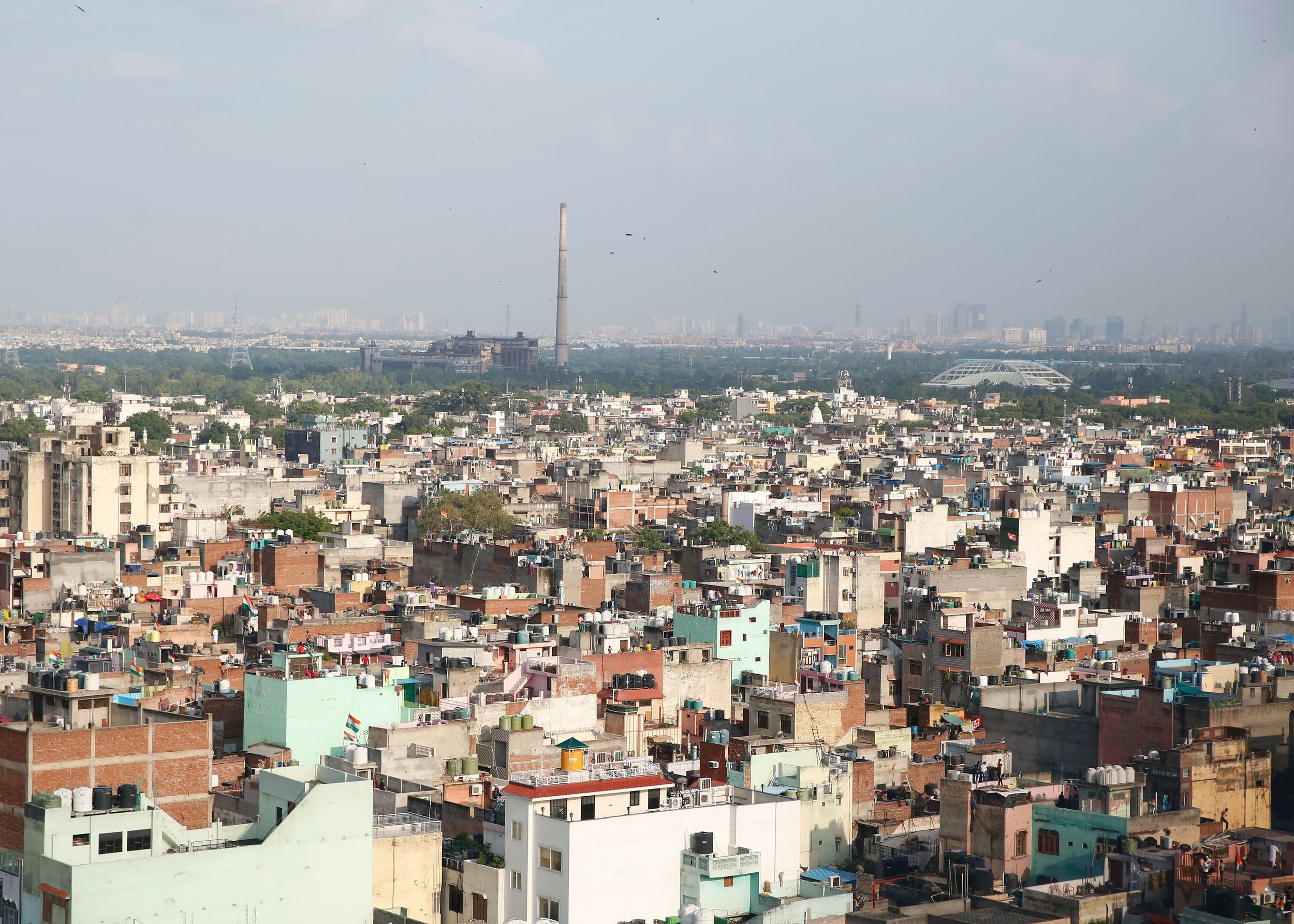
Imagine you are a bird looking over New Delhi from the sky. As you fly closer to the ground, you watch the region’s mountains grow larger and clearer. However, these mountains are not covered in trees or any natural world feature, but man-made items: black bags filled with rubbish, plastic packages, food waste. A never-ending sea of trash. These are the overwhelmingly large landfills that surround Delhi. These dump sites have caused, and still do, tremendous harm to both Indian society and its environment.
India is famous for its mountainous terrain, being home to some of the world’s highest peaks, most notably the Himalayas. Within the urban centres one cannot see these wonders of nature up close, yet there are certain mountains are within eyesight. These mountains are landfills, massive piles of waste that go on for miles, averaging a height of around 60 meters, equivalent to a 15-20 story building. The overwhelmingly large landfills surround Delhi and several other cities within India.
Due to the dump sites’ immense size, they become toxic as the decomposing waste undergoes chemical reactions. The fumes created by said reactions are then released into the atmosphere. The climate crisis is currently one of India’s most pressing issues, with temperatures reaching 50 degrees Celsius, but with a “feels-like” temperature of 63. The fumes exacerbate damages to the country’s already fragile ecosystem. Moreover, the landfills highlight another social plight: child labour. When visiting these landfills, it’s not surprising to see a significant number of children on top of the waste piles. While child labour is an issue in multiple sectors of India’s economy, was picking is one of its most prominent industries.
Within New Delhi limits, there are three major landfills: Okhla, Ghazipur, Bhalswa. On a daily basis, the dump sites receive over 10,000 tons of rubbish, accounting for 3,650,000 tons yearly, which, even for the world’s largest population, are staggering numbers. The landfills frequently catch on fire due to the heavy presence of toxic fumes, mostly methane. The gas alone is responsible for around 30% of the globe’s climate crisis since the Industrial Revolution, and, over a 20-year time frame, it traps heat much more effectively than carbon dioxide. Thus, as India is one of the countries that suffers the most with climate change, the existence of landfills only aggravates the complex problem.
Regarding child labour, the nation made children’s activity in the workforce illegal in 1986, when the Child Labour Act was instituted. However, reality deeply differs from the legislation. Governmental records account for nearly six million children in the workforce; however, independent indexes display numbers between 10 and 30 million children. It is impossible to conclude the exact number of children working, given that the illegality and the fact that it all happens “under the radar”. The complex problems brought by these landfills intersect the environmental and social issues plaguing of Indian society, and if not dealt properly, has the possibility to create further damage in both areas.
Landfills Deterioration Of The Environment
It’s not easy to put into words the environmental damage that landfills cause. Delhi citizens are often victims of the world’s worst air quality, due to vehicular emissions, agricultural burning of crops (the number one methane emission contributor), and, of course, these apocalyptic waste giants. The latter factor is responsible for 14% of India’s total methane emissions. According to satellite data shared with the Guardian, India’s methane is a powerful contender in the competition of which gas worsens the climate crisis most aggressively, since it is said to trap heat much more effectively than carbon dioxide. In an interview, Founder and Director of environmental research and action group Chintan, Bharati Chaturvedi, has disclosed the reason behind the emissions: the absence of waste segregation. The country’s capital does not have a system in place that separate biodegradable from common waste, leading to an inefficient waste disposal system. Fresh produce, or wet waste, goes through the decomposing process, which then creates methane; and, as the landfills have no method of gas capture, the gas then rises into the atmosphere.
Chaturvedi has explained the events that follow the disposal of wet waste: “As soon as it ends up on a landfill, the municipality is stuck: there’s nothing that can be done to stop it producing methane, which then causes all these fires and pollution.” She then added that there are simple measures Delhi could be taking to reduce to amount of methane released; however, there are no policies in place to address the issue.
The director further elucidated why the segregation is not a realistic option: there is no market for wet waste disposal, meaning that there isn’t any economic stimulus for the development and establishment of such. Delhi’s government has scheduled the closure of its three main dumpsites for the end of 2024, two years ago. Nonetheless, the landfills are still up and running, as their closure was regarded as unworkable. The daily arrival of 11 thousand tons of waste has hindered the landfills’ closure.
Throughout India’s harsh summer months, the unforgiving heat causes the landfills to catch on fire, freeing the toxic gas into the air. Due to the severity and extent of these fires, it sometimes takes several days to fully put them out. Residents around the landfills live in fear during summer, given the constant threat of a blaze. Citizens live on the border of real-life inferno and are completely powerless when the flames arrive.
Children On Top Of Garbage Mountains
The UN Convention on the Rights of the Child (UNCRC) is an international legally binding treaty that charts the rights of individuals who are younger than 17 years old. Within the 54 articles present in the convention, many mention the presence of children in the workforce. Nevertheless, article 32 ratifies that governments are to protect children from participating in dangerous work environments and from labour and financial exploitation. It also determines the need for a nation to establish a minimum age to begin working. In practice, child labour continues to harm children’s livelihoods in countries across the globe, many of which signed and ratified the convention. India is one of those countries.
When reaching the centre of the landfills, one will usually see several children scavenging through the seemingly infinite piles of trash. The children are usually between the ages of five to 14 years old, and, while some work alongside their families, others work alone. These children work informally, with no security whatsoever, and with inhumane pay, seeking valuable recyclables and resellable items. They are forced to inhale great sums of the toxic fumes, meaning that they’re at risk not only for the likelihood of combustion, but also for methane poisoning. Even though India is a signatory of the UNCRC and has laws against child labour, the reality of the landfills is exploitative and undermines this, as most of these kids earn a little bit over one dollar per working day.
Furthermore, as horrific as it seems, the children are rarely forced to be there, as they are moved to work under these conditions for pure necessity. The extreme poverty status of their families pushes the children into a lamentable place, where the working conditions emulates those analogous of slavery.
Urgent, pressing, critical: these are words that can summarize the issue the existence of landfills bring to Indian society, India’s environment, and the global environment. To address the ongoing predicament would be to address the many phenomena it perpetuates, including the atmosphere’s degradation and the exploitation of children.
