
Third Way: Hypocrisy is The Name Of The Game
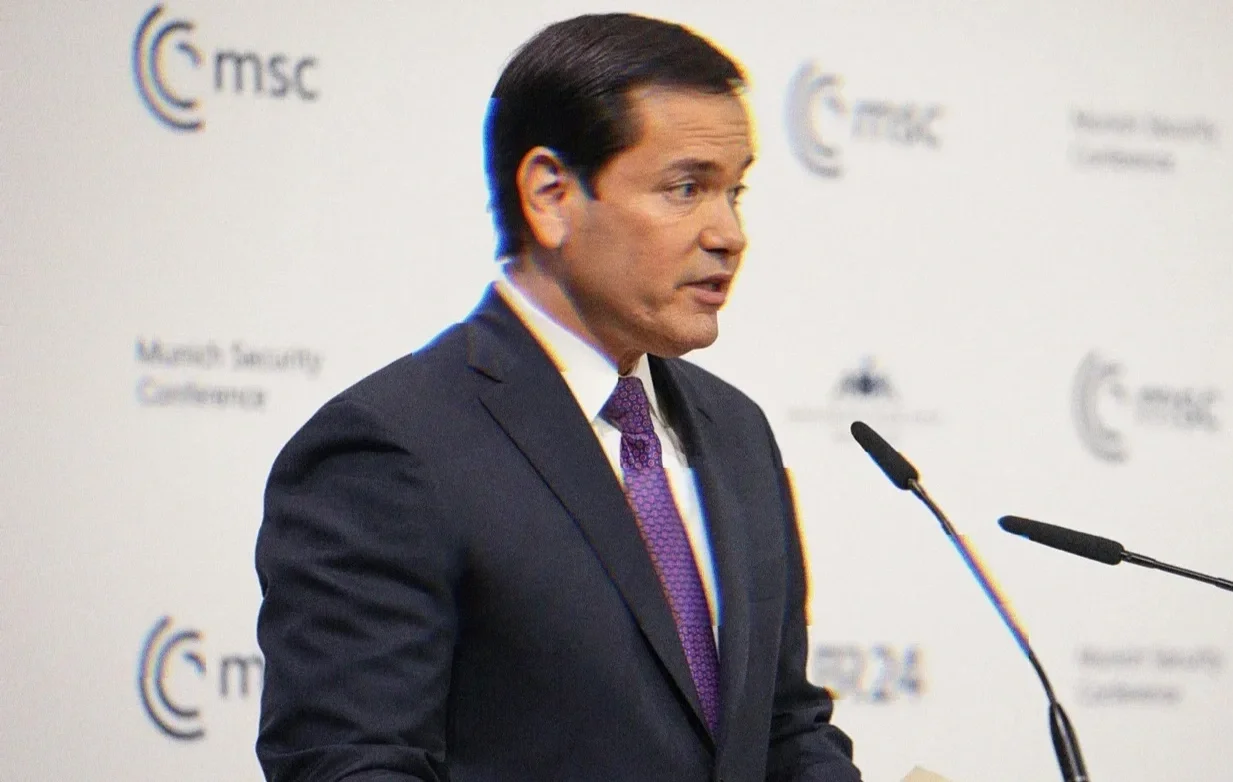
Secretary of State Marco Rubio’s speech at the 2026 Munich Security Conference sets a confusing and uncertain precedent for the future of the United States and Europe’s international relations. Many complex issues were discussed; among them were national security, international commerce, and global relations. Rubio made many claims regarding U.S. and European relations, some grounded in validity and some scarily misguided.
Rubio introduces first the history of the Munich Security Conference (MSC). He recalls the earliest days of the organization and the devastation of the Second World War and events of the Cold War that sparked its inception. The picture he paints of a continent divided and the patriotism and allieship of the United States and Europe is clear and effectively presented. He bolsters the spirit of the American people as well as Europeans by highlighting a moment of intense hardship that did not divide, but rather unified nations for the interest of rescuing and rebuilding a desolated continent.
Rubio’s first point of discussion and main focus of the speech is the relationship between the United States and Europe. A relationship which, if his definition is to be believed, is in direct opposition of its origins. In 1776 the 13 Colonies declared independence from Britain and its Monarchical rule. Rubio’s claim about the importance of the United States firmly planted roots in Europe is directly undermined by the country's first act as a nation. The foundational idea of America is built on the upheaval of these roots. The 13 colonies fought for their independence from Great Britain and a Monarchical rule and intentionally severed those ties in the name of independence and democracy - the two foundational beliefs that the U.S. is supposed to hold. Note that in this sentence, “supposed to” is the operative phrase.
This idea of connection and cooperation with our European allies is also undermined by the U.S.’s departure from many global organizations. Global organizations that were created to bolster the unity of national powers and provide specified support to high priority issues across the globe. By withdrawing from these organizations, the U.S. declares that they either don’t need their allies' support or that they simply don’t consider it worthwhile. A statement which alienates many and protects few.
His remarks about embracing the shared heritage of the U.S. and Europe glorifies a history with roots planted firmly in colonialism and systemic racism. Countries built on the backs of enslaved peoples and Indigenous individuals. For anyone to treat this as a nostalgic time in history and treat it as anything besides the horrific circumstance it was, is simply disgusting. Rubio then goes on to praise Italian Explorer Christopher Columbus for his discovery of America as well as claiming that he can be thanked for bringing Christianity to America. First of all, it is a well known fact that indigenous peoples lived on the land now called America for thousands of years prior to Columbus’s “discovery”. Second of all, with his “christianity” he also brought disease, death, and rape to the people already living on these shores. Christopher Columbus is not a historical figure to idolize and it is not someone whom Americans should include in their national and historical pride.
Arguably the most shocking element of his speech is his insistence on the sharing of Christian views amongst the United States and Europe. There are thousands of religions across not only the United States and Europe, but the world as a whole. Christianity is not the only, nor the “most important” one, despite what far right conservatives seem to believe. The burgeoning issue of Christian Nationalism in the United States has grown considerably since President Trump took office. This movement flies directly in the face of the first amendment and its declaration of individual right to freedom of speech and self expression. Though, it would seem, President Trump and his supporters only care about the Constitution when it serves their own interests, particularly in regards to the freedom of speech.
Rubio again contradicts himself when praising the many cultural elements that European settlers brought with them to America and how these individuals have helped shape the face of the nation as it is known today. If this sounds familiar, good, it should. He is describing immigration. And not only describing it, but praising it. This would not be as shocking if not moments earlier he had not been harping on the idea of immigration control and its importance. He claims that immigration control is not meant to be hateful, and while this is correct, the ways in which the Trump administration has chosen to handle such a complex process is decidedly quite hateful. America owes its heritage to the mix of cultures and religions brought by those who immigrate to the country.
Marco Rubio’s speech at the Munich Security Conference highlighted the instability and uncertainty of the Trump administration in a frighteningly clear way. His speech read as a hidden plea for allegiance between nations in the face of crumbling support and unstable global relations. The ways in which the United States has alienated its allies and placed its own interest above that of others has created a volatile global relationship that will not be solved by the utilization of a few pretty words strung together.