
Liberty Exposé: Bible Bonkers
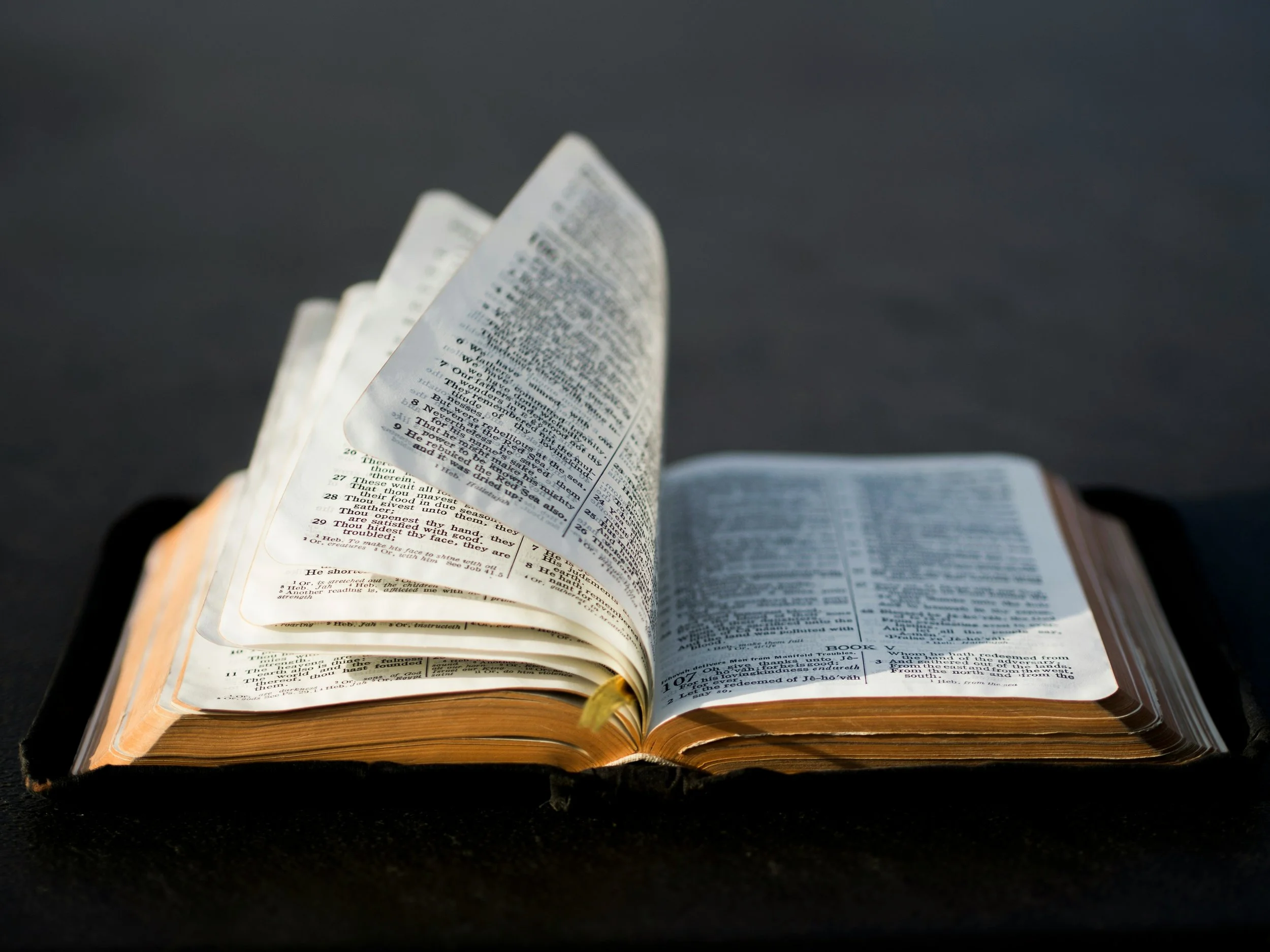
Aaron Burden
Religion and politics, especially in Western culture, are thought to be completely at odds with one another. But the reality is much more nuanced, as someone’s faith, or lack thereof, has far more influence than just determining denominations or which pews they sit in come Sunday morning. Faith greatly determines personal perspectives, and people inevitably vote for who and what they believe in. They may occupy different spheres within our hearts and minds, but the purview of each is not necessarily separate from one another. There’s bound to be some overlap, and how much influence religion should hold over politics (and vice-versa) has dominated debates regarding governance for over a thousand years. The prevailing consensus, derived from centuries of theological tufts and biblically-based bloodshed, realized each were integral and indispensable aspects of society, but neither should surpass or supplant the other.
America’s Founding Fathers understood this and how could they not? Many precursor settlements that would develop into the Thirteen Colonies were founded under the pretense of religious freedom, and countless settlers crossed the Atlantic to escape religious persecution and the intertwining of God and government under the English monarchy and its Anglican Church. Although raised in the predominant Christian denominations of their era, the majority of Founding Fathers were catalyzed into revolutionary action from Enlightenment ideals, one of which being Deism. Along with notions of theocratic rationalism, many Founding Fathers opted into the belief “that the main factor in serving God was living a good and moral life, that promoting morality was the central value and purpose of religion,” and that “virtually all religions fulfilled that purpose – not just Christianity.”
This Deistic and rational outlook had no small influence in instilling the “wisdom of our founding fathers who purposely devised a government and a nation based upon the Constitution that gave people the freedom and liberty to practice their religion.” The Religion Clauses of the First Amendment were not only enacted to prevent injustices that naturally arise from an absence of “Separation of Church and State”, but also to ensure that every American can enjoy “certain unalienable Rights” that are “endowed by their Creator”, whatever, or whomever, that Creator may be.
But this Constitutional certainty has increasingly come under question from both federal and state authorities. At the forefront of the argument is a recent ruling from the Texas State Board of Education (SBOE), mandating the inclusion of Biblical texts to the “reading list for the state’s 5.4 million kindergartners to 12th-graders.” America has always been “One Nation Under God", but is it the jurisdiction of legislators and educators to influence a child’s personal relationship with their respective Creator, or what religion our nation pledges itself under?
The Facts of Faith
“But the final version that was just authorized effectively, again, is the state saying that children as young as 6 years old, all the way up to preparing to receive your high school diploma, will be required to engage with or read Bible passages.” — Jaden Edison
Created by the Texas Education Agency (TEA), the initial draft was shortened and revised amidst contentious debate before the SBOE approved the required literary list in June. After a vote of 9-5, SBOE’s Republican-majority board now requires students in the public school system to read Biblical scripture and other classical texts in addition to their current curriculum. Throughout the journey from elementary to high school, students in Texas “will have to read 17 Bible stories or passages from across the Old and New Testaments.” once the initiative begins in 2030. Texas Democratic lawmakers are understandably opposed, issuing a letter of opposition before the SBOE’s final ruling, while their Republican counterparts responded in turn, praising the list as a “long-overdue restoration of academic rigor and cultural grounding to Texas classrooms.”
The SBOE’s required reading list isn’t the only addition to the curriculum that’s drawing ire towards Texas’ education system. Signed into law by Gov. Gregg Abbott in 2025, Texas Senate Bill 10 (SB 10) declared that a “public elementary or secondary school shall display in a conspicuous place in each classroom of the school a durable poster or framed copy of the Ten Commandments”, and it was not long before backlash from both public and private sectors resulted in a lawsuit hoping to strike down SB 10. In April, The 5th U.S. Circuit Court of Appeals “ruled that Texas’ law requiring public schools to display posters of the Ten Commandments did not violate the Constitution”, allowing Texas to investigate and enforce the classroom display of Ten Commandment posters.
Texas is just the latest state demanding American classrooms to hang Moses’ stone tablets. In 2024, Louisiana set the precedent as the first state to enact similar legislation. Although the 5th U.S. Circuit Court of Appeals deemed the Louisiana law unconstitutional in 2025, appellate judges vacated injunction against the law in 2026, allowing for the posters to proceed. Following suit, Alabama Gov. Kay Ivey gave her stamp on legislature “requiring the Ten Commandments be displayed in each history classroom for 5th-12th grade students and in a common area of the school.” Arkansas attempted its own foray into Old Testament territory, passing Arkansas’ Act 573 in 2025, mandating the display of the Ten Commandments in public classrooms, government buildings and state agencies. While federal courts have permanently blocked the Ten Commandments from being displayed in Arkansas’ public schools, appeals are already underway, and several states are joining in on the testament trend, with South Carolina advancing its own legislation requiring public schools and colleges to display the Ten Commandments.
One Nation Under (Every) God
“We’re bringing back religion in our country, and we’re bringing it back quickly and strongly—because for America to be a great nation, we must always be one nation under God.” — President Trump
Considered by themselves, maybe all these seemingly Christian-centered initiatives aren’t that bad. A mandated reading lists might raise “serious concerns about religious favoritism in public education and risk excluding students whose identities and traditions are not reflected.” After all, nearly one third of Texas doesn’t identify as Christian. Yet Texas, like Louisiana, Alabama, or Arkansas, is only one state. States enjoy a high degree of autonomy and the broad discretion to govern themselves. But if a state’s policies or opinions are out of touch with America’s Constitutional principles of religious pluralism, it’s only natural to assume that the federal government will gladly right their course and bring them back to a Constitutional center. Right?
You know what happens when you assume, and it increasingly appears to be so. Throughout both administrations, President Trump has succeeded in ensuring that “Religion is back in our country, bigger and stronger than it has been in many, many years,” just not every religion equally. Instead, he’s promoted what seems to be a narrow and constricted conception of Judeo-Christian faith, espousing rhetoric and backing dogmatic initiatives that makes defending against criticism of a secret, Handmaid’s Tale-esque agenda no easy task.
Spearheading the administration’s faith initiatives is the Religious Liberty Commission (RLC). Established via Executive Order by Trump in 2025, the RLC was tasked with producing a “comprehensive report on the foundations of religious liberty in America,” and creating “programs to increase awareness of and celebrate America’s peaceful religious pluralism.” But for a task force dedicated to promoting religious pluralism, the RLC’s membership is comprised almost entirely of Christians, leading to criticism that the Trump-Vance Commission “collectively represent the narrow perspective that America was founded as a “Judeo-Christian” nation and must be guided by Biblical principles.” Interfaith leaders have levied a lawsuit against the RLC based upon such criticism, arguing that the RLC “advocated for discrimination against minority groups under the guise of “religious freedom,” and “threatens, rather than encourages, true religious freedom.”
Not only has the RLC been accused of elevating Christianity over other religions, the Commission has also been accused of “eroding the separation of church and state”. Neither are these accusations entirely unwarranted, with RLC Chairman and Texas Lt. Gov. Dan Patrick stating in an April hearing, “We need to say there is no separation of church and state” and, “That’s a lie”, in reference to the Constitutional principle. Echoing Patrick’s statements is the RLC’s recently released final draft report, a 224 page document claiming the urgency for “building bridges between church and state”. The report highlights the relationship between religion and classrooms, arguing “that students are being forced to suppress their religious beliefs for the sake of a certain curriculum or school policy.” Ironic, considering children across Texas and other states may have to suppress their own religious beliefs that aren’t lockstep with the mandated scriptural readings or Ten Commandment posters hanging above them. Moreover, the RLC’s report calls for the repealing of the Johnson Amendment, a provision in U.S. Tax Code preventing all tax-exempt 501©(3) nonprofit organizations (including churches) from “engaging in any political activity, particularly as it relates to campaigning for or against a particular candidate for political office.” Such a repeal would have dire consequences according to the National Council of Nonprofits, with the agency asserting the repeal “would politicize charitable nonprofits, houses of worship, and foundations, plunging them into caustic partisanship for the benefit of politicians and political operatives.”
Across this greater context of pro-Christian initiatives, it’s hardly surprising that Republican-helmed states are following the denominational direction of Trump and his RLC. But that doesn’t mean it should become the status quo. On Constitutional grounds alone, conservatives should be the loudest voices when it comes to defending the individual liberties of American citizens. Additionally, conservatives have always been the first and loudest to decry comprehensive sex education and gender identity programs within America’s education system. From a conservative standpoint, such issues are best relegated to being discussed at home, arguing that education should never intrude on parental rights. So shouldn’t the same perspective and argument be equally applied to religion? If America’s youth shouldn’t be indoctrinated with “leftist ideals”, is it any better for them to be indoctrinated from the right? Nobody likes a hypocrite.
Nor does anyone want to cast their ballot for one. Or at least they shouldn’t. By departing from a usually dogmatic adherence to defending constitutional liberties, and potentially enforcing a strict Judeo-Christian worldview throughout classrooms, Trump and the GOP threaten to irreversibly damage an already splintering MAGA coalition. Combined with growing frustration over the administration’s handling of the Epstein files and a stark reversal of Trump’s campaign promise of “no foreign wars” with the war in Iran, the pro-Christian urging for closing the gap between church and state may be the final straw for many Republicans. Although many Republicans are of some denomination of Christian, many on the right are not. Muslim support for Trump grew massively between the 2020 and 2024 elections, rising from 9% to 33% and playing a key role in delivering Michigan for Trump. But current and future non-Christian voters may find themselves at odds with a GOP seemingly advocating for Christianity above all other religions, if not all but endorsing it.
“Religious liberty only works when it is universal. The moment it becomes a privilege reserved for the majority, it stops being a right and becomes a tool of exclusion.”— Assemblyman Ravi S. Bhalla
As America approaches the 250th anniversary of its founding, it’s paramount for every American to recognize and appreciate that “religious liberty is a cornerstone of our democracy.” The United States was enshrined under the principles of religious freedom, and the Founding Fathers realized that “religion was indispensable to society because it engendered morality.” But they hardly envisioned an America where one religion takes center stage, or where the freedom to interact with one’s Creator is overshadowed by mandated Biblical texts or Old Testament posters.
America will always be one nation under God, but it’s every American’s right to decide what that deity is. No legislator or administration, Republican or Democrat, should ever politicize the pulpit and make that choice for them.
