
Public Interest: How Starmer's downfall became inevitable
Pool
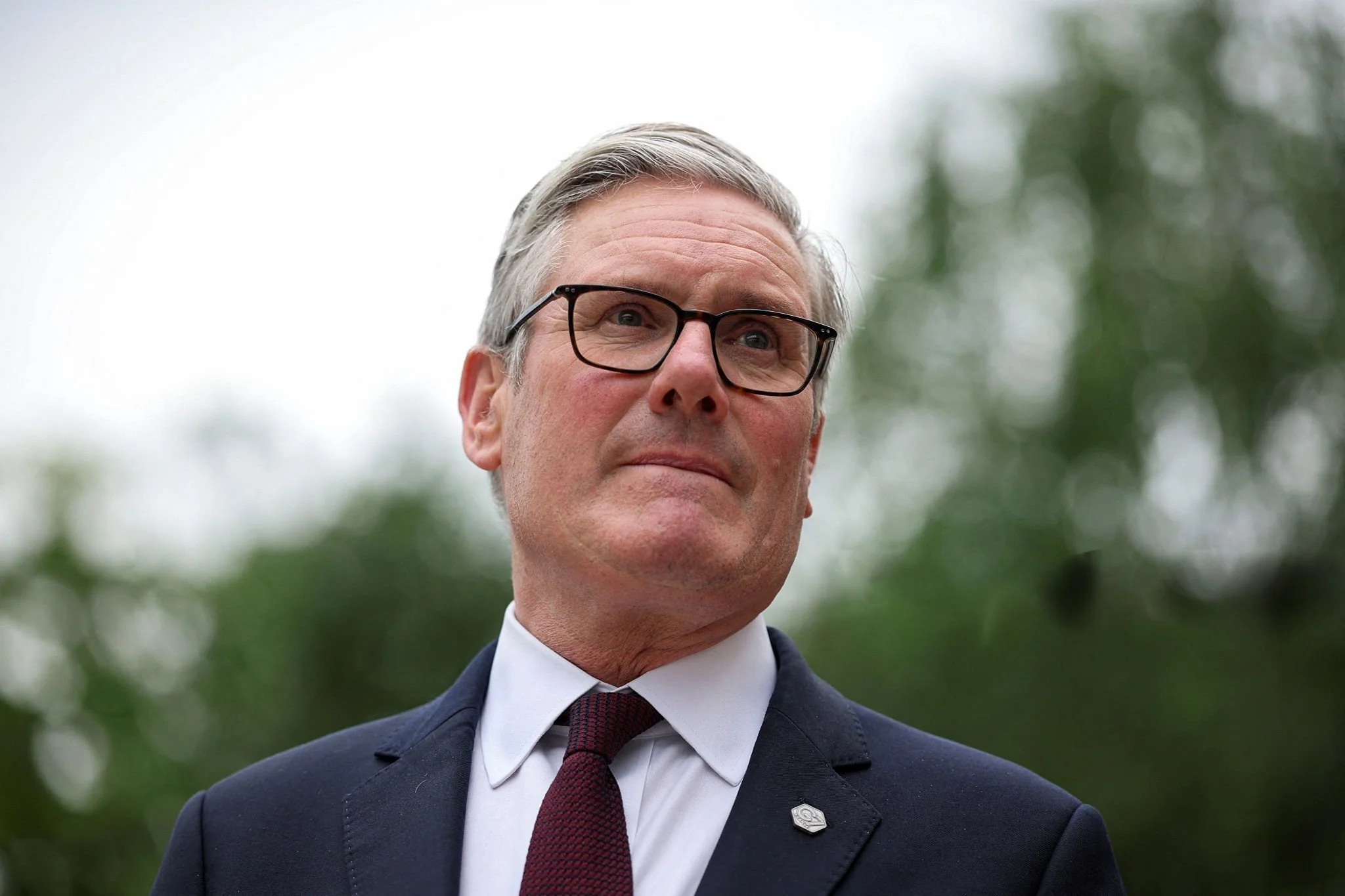
After less than two years in office, Keir Starmer has confirmed he will be stepping down as UK Prime Minister and as leader of the Labour party, following weeks of speculation since Labour's disastrous results at May's local elections.
His departure was likely inevitable, having been consistently behind in the polls since after less than a year in office. For many on the left, as well as on the right, his downfall has been a long time coming, after he abandoned many of the pledges he made to become Labour leader back in 2020, such as a commitment to nationalizing public utilities, the scrapping of tuition fees, and electoral reform.
When Starmer finally did become Prime Minister, it seemed to many that little had actually changed, in spite of this being the slogan that he ran on in 2024. Immediately following the general election, commentators talked about there likely only being a short or even non-existent ‘honeymoon’ period for Starmer, given the troubled economic situation he inherited, a hostile, right-wing media, and Labour's own fiscal rules, laid down by the Chancellor, Rachel Reeves, which, whilst helping to avoid the old accusation in the run up to the election that Labour were all about tax-and-spend, seemed then to limit the government in what it could actually deliver.
Much like the Conservatives before them, the government's focus in raising money seemed, as a result, to hit the poor and the vulnerable as much as the well off. Only weeks into the new Labour government, several high-profile MP's from the left of the party found themselves suspended for their decision to back an SNP motion to scrap the two-child benefit cap, introduced by the Conservatives under Theresa May - something the government would themselves turn around on almost two years later, after they acknowledged that it had indeed worsened child poverty.
This went on to become something of a theme for Starmer's government, as seen with their subsequent U-turn's on cuts to benefits for disabled people, and on their decision to means-test the Winter Fuel Allowance given out to pensioners, which caused a massive uproar.
The government has also come under criticism for the UK's continued arming and financing of Israel - even prior to the current supposed “ceasefire”, raising questions around whether the UK could be complicit in genocide. Though they may have committed instances of criminal violence, as in their breaking into Elbit Systems UK, the proscription of groups such as Palestine Action as a terrorist organization, on par with Al Qaeda or ISIS, and the subsequent spectacle of pensioners and vicars being arrested by police simply for protesting, was widely condemned.
The choice to cut international aid, which may well have contributed to thousands of preventable deaths, was an area on which Labour seemed to go even further than the Conservatives had, as were their efforts to restrict immigration, extending the qualifying period for migrants to apply for indefinite leave to remain by as much as ten years.
And yet, in spite of all these failings, it is perhaps worth looking closer at why exactly Starmer's premiership has been seen as negatively as it has. Several polls have ranked him as among the least popular Prime Minister's of all time - even in spite of there seemingly being little to compare with, for example, the levels of division, mass unemployment, and wholesale industrial decline seen under Margaret Thatcher, Tony Blair's decision to go into Iraq, the controversies around Austerity and Brexit, or the sheer, outright criminality and incompetence that followed under Boris Johnson, and then the financial crisis that Liz Truss managed to cause in just under two months. There is much about Starmer's premiership in which to be disappointed - yet the level of vitriol for him personally is in itself noteworthy.
As Starmer stood outside Downing Street to give his resignation speech, he listed a whole swathe of his stated achievements, such as a reduction in NHS waiting times, as well as an improving economy and new rights for workers and renters. And yet, very little of these supposed successes seem to have had much of an impact on the public consciousness, whilst figures such as Nigel Farage, the Reform party leader, have continued to gain popularity, even in spite of his initial support for Trump's Iran war and recent controversies around the millions he has received from crypto financiers.
It should not be underestimated how much of an impact the growth of the far right - especially given the influence of figures like Elon Musk following his takeover of X, not to mention Russian attempts at spreading disinformation and extremism - has skewed perceptions of the current government, as well as the notion that the country is indeed “broken.”
It was not even a month on from the 2024 election when the riots in Southport took place, where the horrific murder of several young girls was used as an excuse by mobs to attack, harass, and intimidate muslims, migrants, asylum seekers, and people of color, with open street battles taking place between rioters and police, all the while stoked by the likes of Farage.
The arrest of Lucy Connolly, the wife of a former Conservative councillor, who had posted on X calling for "mass deportation now," adding "set fire to all the... hotels [housing asylum seekers]... for all I care,” was immediately pedalled by the far-right as an example of a police state and of “two-tier policing,” where migrants were supposedly being given preferential treatment over UK citizens. Starmer was widely dubbed as “Two-Tier Keir” - a label that has only gained further traction this last month following the shocking mishandling of the murder of Henry Nowak. Meanwhile, various commentators have accused the mainstream media of failing to highlight Labour's successes, and of institutional bias against the current government.
From the start, it was clear that Labour's landslide in 2024 was as much a vote against the Conservatives, after their 14 years in office, than it was any ringing endorsement for Starmerism. The election was one of the most disproportionate ever seen, with the country's First Past the Post system ensuring that Labour were able to artificially inflate their share of the vote in much the same way as the Conservatives had previously, as they benefited from tactical voting against the Conservatives across the country.
Throughout his leadership, Starmer aimed, in shifting the party away from the left and towards the centre, to make Labour ‘electable’ again, after some had entirely written off the prospect of it ever forming a government in the foreseeable future. Perhaps as a result of this, Starmer and his allies have seemed to be stuck in the mindset of opposition even since getting into government.
Just as with Tony Blair in 1997, Labour gained a huge majority in 2024, and with it the potential to bring about real, transformative change, similar perhaps in scale to that brought about by Clement Attlee's government, back in 1945. Instead, they have seemed timid and Tory-lite, U-turning on a whole range of policies, and seemingly spending much of their time trying to win over Reform voters - a voting base that appears set against them whatever they do - whilst losing the progressive vote to the Greens.
Starmer was elected on promises that he wouldn't rock the boat too much, would not raise taxes, would stick to the fiscal rules, whilst at the same time also promising real change. The question now is whether his incoming successor, Andy Burnham, will have any more luck in squaring this circle.
It seems inevitable now that the former Manchester Mayor will be Starmer's replacement as Prime Minister, given that other candidates for the Labour leadership, such as Wes Streeting, have now endorsed him. In a keynote speech made last week - surely among the most watched speeches of any incoming backbench MP in UK history - Burnham has made some encouraging statements. His talk of devolving power away from Westminster, of creating a “No.10 in the North,” and of massively expanding council housing, all have the potential to be transformative.
Yet, many can rightfully argue that he will have no democratic mandate to implement radical changes without first calling a general election. Burnham, it seems, is aware of this, having already pledged that he too will stick to the fiscal rules laid down in Labour's 2024 manifesto. Without a mandate or a manifesto of his own to bring through the changes he's talked about, and with the media landscape as it is, there remains the very real possibility that Burnham may end up being just as limited as Starmer in what he can actually achieve, with perhaps an even shorter ‘honeymoon’ period for him.
