
Public Interest: Where Next After UK's Local Elections
Phil Hearing
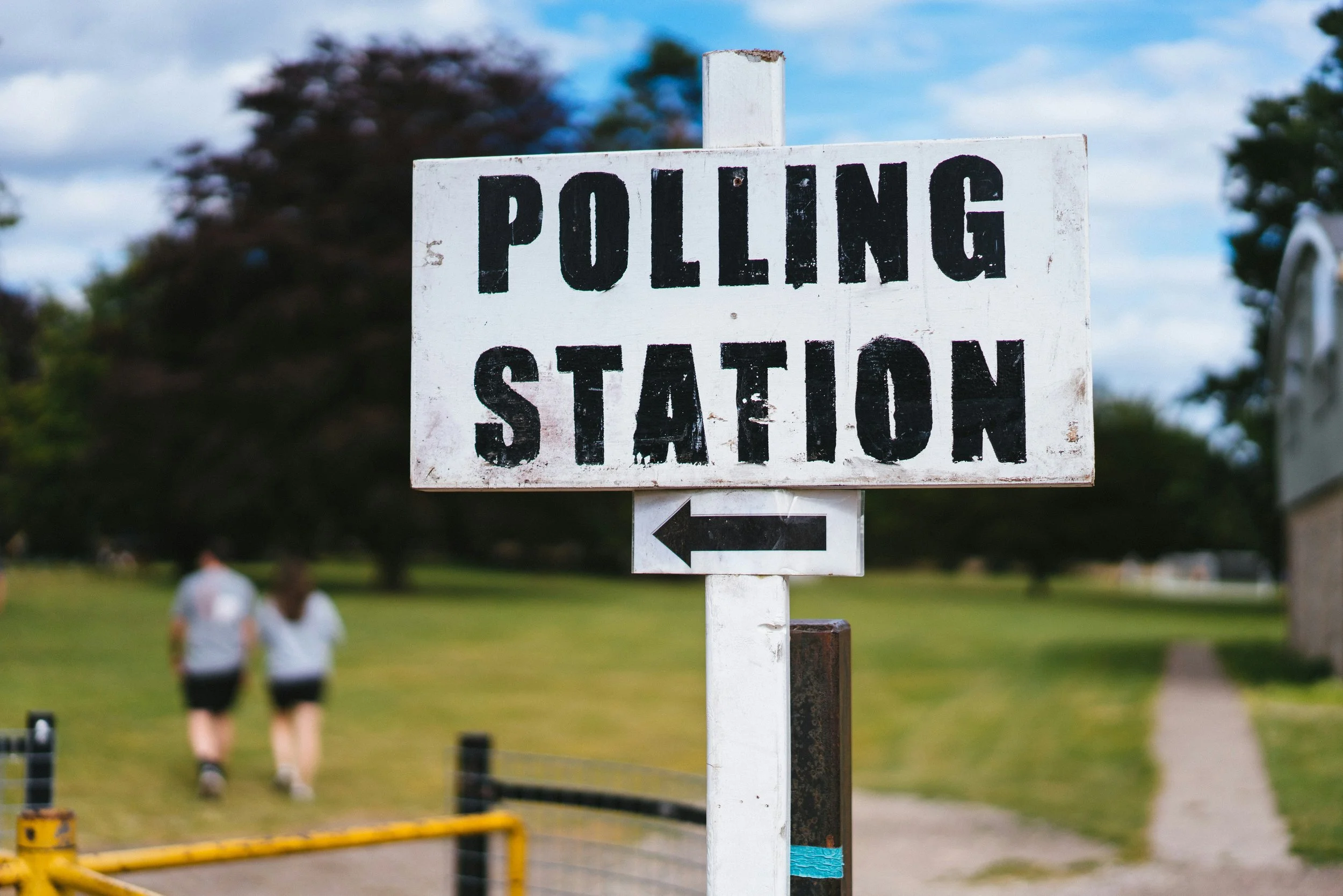
This month saw the UK go to the polls, with local elections being held across England, alongside elections for the devolved parliaments in both Scotland and Wales. Local elections are often compared to the midterms in the US, since, even though ostensibly they are purely for the election of local authorities, they are more often than not also used as a means of passing judgment on the government of the day in Westminster. This has perhaps never been so much the case as with this month's elections, which took place on May 7th, and are already being described as a “seismic” moment in UK politics.
Even beforehand, the local elections were being portrayed as a referendum of sorts on Prime Minister Keir Starmer's leadership, due to his plummeting popularity, rumored challenges from within the Labour Party, and the right-wing populist Reform Party consistently leading in the polls. As results came through, it became clear that they were every bit as disastrous for Labour as had been predicted, with the party losing 1,400 councillors, as well as being wiped out in its traditional heartlands, such as Wales. Nationalists are now, for the first time, in charge in Wales, Scotland, and Northern Ireland, raising questions about the integrity of the UK itself. At the same time, there has been a surge in support for Reform, which won over 1,450 seats. Reform leader Nigel Farage described the results as a “truly historic shift in British politics,” stating that, “it’s a big, big day. Not just for our party, but for a complete reshaping of British politics in every way.” Farage, along with other party leaders such as the Green Party's Zack Polanski, have hailed the election as marking the end of the two-party system that has dominated British politics since the very beginnings of its parliamentary democracy, with both Labour and the Conservatives experiencing losses.
This has resulted in fevered speculation in the weeks since as to whether Starmer's position as Prime Minister is still tenable, with now almost 100 Labour MP's calling on him to resign, as well as several bids already being made for the Labour leadership. Wes Streeting, who is seen as representing the Labour right, has resigned as Health Secretary and called for a “broad” contest for the leadership, particularly highlighting the need for a closer relationship with the EU as the UK marks a decade since Brexit. Meanwhile, supposed favorite Andy Burnham, the Mayor for Greater Manchester, will be standing as Labour MP for the Greater Manchester constituency of Makerfield, after having previously been blocked earlier in the year, and has talked about the need for key industries to be taken back into public ownership - likely a popular point with the left of the Labour Party. Other contenders being touted include former Deputy Prime Minister Angela Rayner, and former Labour leader, Ed Miliband.
For many on the left, and particularly for those still attached to the Labour Party, it is now a matter of necessity that Starmer must go. The results produced by the local elections were nothing if not resounding - parts of the country that had been wedded to the Labour movement for decades have now broken away. Labour had been elected in 2024 on a slogan of change, but across much of the country it seems this change has not been felt. Those on the left of the Labour party have been adamant that a change is needed not only in leadership but also in direction, if they are to prevent a repeat of these kinds of results at the next general election. Apsana Begum, the MP for Poplar and Limehouse, stated on X that:
Comparisons are already being made between Starmer and US President Joe Biden, with many fearing that the PM's insistence on hanging on in spite of his low popularity will have just the same effect of letting Farage into Downing Street.
Of course, there is also the danger that an abrupt change in the leadership, one that would be voted on only by members of the Labour Party and the trade unions, not the general public, might itself have parallels with the “coronation” of Kamala Harris in 2024, and the role this may have played in Donald Trump's win. It is likely that a change in leadership of the Labour Party - particularly if a more left-leaning candidate such as Burnham is chosen - will only fuel calls for an early general election, since opposition parties can claim that a new Prime Minister would have no mandate for bringing through any substantial change. Labour had continually criticized the Conservatives for their abrupt changes in leadership during the period they were in office, and, if they descend into their own round of infighting, this is something that will only further play into the hands of figures such as Farage, who can then claim the other parties are essentially no different to each other. It is also worth considering that whoever is in charge of the Labour Party may be in a near unwinnable situation, amid the rise in populism, and a media that has arguably done little to highlight Starmer's successes, and would likely be even more biased against a candidate further to the left.
Whatever the Labour Party does, it is essential that it realizes the nature of the game has now fundamentally changed. The local elections have shown that the voting bases for both the main two parties have completely fragmented, and they no longer hold the dominance they once took for granted. Other parties, such as Reform and the Greens, may now have a huge influence on the outcome of the next general election. However, in spite of all the talk of a new era of “multi-party politics”, the first-past-the-post system used in the UK has itself not changed, meaning a disproportionate amount of seats can be given to whichever party is in the ascendancy, to the disadvantage of others. This was seen at the locals, where Reform won numerous councils in spite of getting less than half of the vote. This point was hammered home by the campaign group Make Votes Matter, which supports proportional representation, in the aftermath of the elections.
“This election isn’t just a story about Labour losing support or Reform rising,” they stated. “It’s a warning sign that our political system is struggling to reflect how people actually vote. British politics is undergoing unprecedented transformation. First Past the Post doesn’t create strong democracy, it creates poor representation. It’s time for Westminster to wake up and change the voting system so that people’s votes actually count.”
For decades, the two main parties have held back from actually reforming the electoral system - most likely because of how it has benefited them. Starmer himself had stated this system needed redressing when first standing as Labour leader, only for this to be disregarded following his win in 2024. Now however, it seems this system may no longer suit them either, and indeed, could well hand Reform a super-majority. As such, we may be seeing not a genuine shift towards multi-party politics, but rather simply a change in which parties dominate the two-party system.
Of all the current contenders for the Labour leadership, this is an issue on which Burnham has previously been supportive, though already he has indicated this would need to be part of an election manifesto before he could back it. Whilst the Greens have stated that Burnham “shouldn't feel entitled to a seat” and that they will still contest Makerfield, figures such as Caroline Lucas, the Greens former leader, have nevertheless suggested that the Greens should not be standing in Burnham's way there, if this does genuinely mean a chance at a fairer voting system for the country.
The latest round of local elections show that there is a real danger of a Reform-led government getting in at the next general election. After what has been seen in the US under Trump, this is something that all progressives should be united on fighting against. If a Burnham government means there is a chance at real electoral reform, then the UK may genuinely find itself in a new era of multi-party politics that actually delivers for voters, instead of the broken and outdated system it currently has.
