
Latin Analysis: Delcy Rodríguez's First 90 Days Leading Venezuela and What Comes Next
Xinhua News Agency
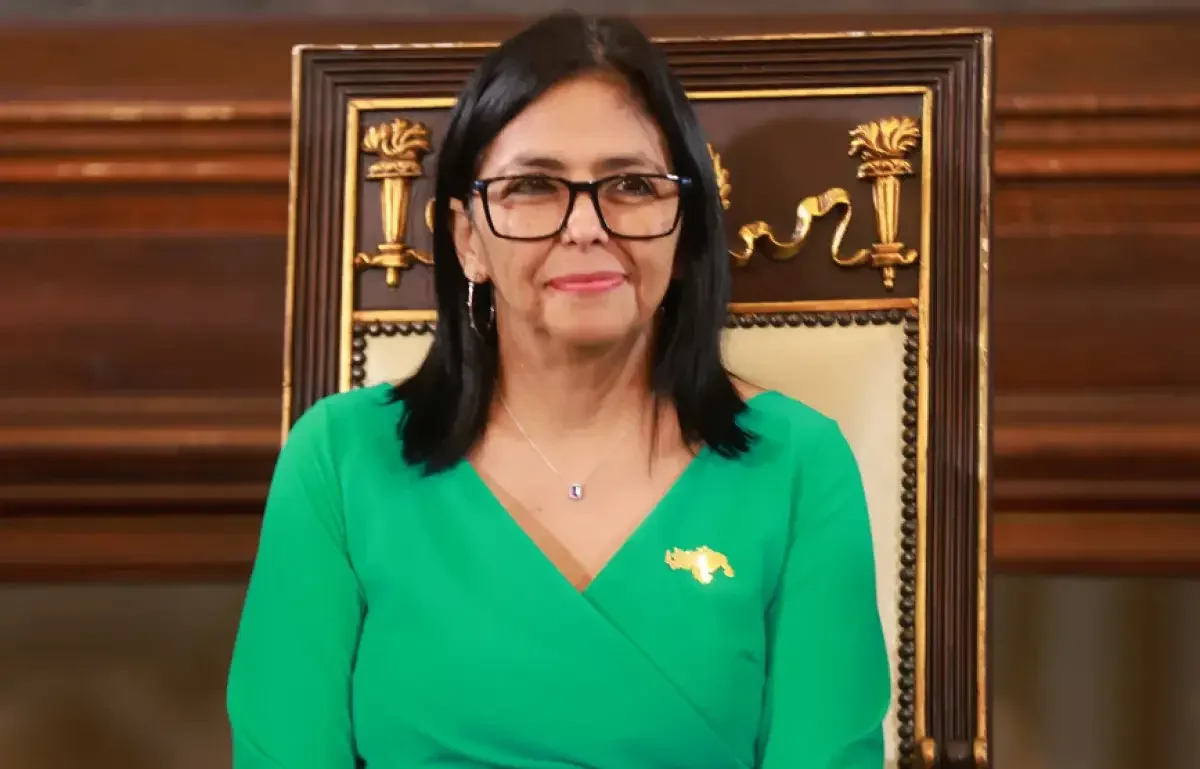
After just over three months into her tenure as Venezuela’s acting president, Delcy Rodríguez has signed an amnesty law, reopened diplomatic channels with the United States, and reshuffled the cabinet she inherited from Nicolás Maduro. There are concerns, however, that the constitutional basis for her continued rule is unfounded and that democratic elections are not on the horizon. What remains unclear is whether Rodríguez is steering a genuine transition or simply extending Venezuela's authoritarian status quo under a new figurehead.
Delcy Rodríguez’s Tenuous Mandate
Rodríguez assumed power on January 5, 2026, after US forces seized former president Nicolás Maduro and his wife, Cilia Flores, in Caracas and flew them to New York to face drug trafficking charges. Venezuela’s Supreme Court classified Maduro's removal as a “forced absence” and used this to install Rodríguez as acting president. The Venezuelan constitution permits a vice president to fill a temporary absence for 90 days, extendable by the National Assembly for a further 90-day period.
With the first deadline passing on April 3, without a public vote to extend it, Rodríguez has not signalled an intention to step back. In a televised address a few days later, she announced a minimum wage increase effective May 1 and asked for patience from the public as the government works to strengthen the economy – this has been received by many Venezuelans and opposition figures as an intention to remain in power.
The National Assembly, under the control of her party, has refrained from declaring the presidency permanently vacant, a move that would trigger a snap election. It also has not formally extended her mandate. Provea, a Venezuelan human rights NGO, has warned that the Supreme Court’s silence on her continued tenure is not a neutral omission but a political choice, while analysts note that the Chavista government has a history of using flexible legal interpretations to hold on to power.
On top of this, the cabinet she has assembled does not suggest a clean break. Diosdado Cabello, one of Chavismo's most powerful and controversial figures, remains Interior Minister. Her brother, Jorge Rodríguez, controls the National Assembly. Her new Defense Minister, Gustavo González is a former intelligence chief accused by the United States of overseeing torture and human rights abuses. Analysts say these appointments signal that Rodríguez is not prioritizing the pursuit of genuine institutional reform.
Warming Relations With The United States
Following Maduro’s removal, many observers were surprised by the Trump administration's decision to back Rodríguez – a close ally of the ousted leader – instead of the opposition. The US State Department recognised her as the “sole Head of State” in Venezuela, and in early April, the Treasury Department lifted her from the Specially Designated Nationals list – this removed restrictions that had barred Americans from doing business with her. The United States has also reopened its embassy in Caracas for the first time in seven years, while Venezuela dispatched diplomats to Washington to reopen its own mission there.
The logic behind the Trump administration’s approach appears primarily economic. Several high-level US delegations have visited Caracas to discuss access to Venezuela's oil and mineral wealth, and Venezuela has passed hydrocarbon and mining law reforms that open the sector to private capital and international arbitration. US Energy Secretary Chris Wright projected that Venezuela could increase oil output by 300,000 to 400,000 barrels per day this year, a rise of roughly 40%. That target, however, depends on unblocking the payment channels currently obstructed by existing sanctions. The United States is now reportedly weighing whether to lift the sanctions on Venezuela's central bank, which have effectively cut it off from the international financial system since 2019. This would allow oil revenues to flow more freely and stabilise Venezuela's foreign exchange market.
Economic And Political Grievances Mount
On the streets of Venezuela, however, the mood is less accommodating. On April 9, union leaders, retirees, and public sector workers marched toward the presidential palace in Caracas, demanding higher wages and meaningful pensions, met by police blockades. Many public sector workers earn around $160 a month, well below what is needed to cover necessities, while Venezuela's formal minimum wage stands at the equivalent of under 50 cents. Rodríguez’s promise of a “responsible” wage increase on May 1, without disclosing the actual figure, was met with open skepticism. Protesters said that a token wage increase is not what they want, but a salary that can actually cover the cost of living.
Political freedom remains another concern. Rodríguez recently signed an amnesty law that led to the release of hundreds of detainees, but the prisoner rights group Foro Penal reports that nearly 500 political prisoners remain behind bars. The Trump administration had made prisoner releases a condition for deeper engagement – opposition figures and activists in Caracas have therefore criticised the United States for lifting sanctions before that condition was fully met.
Political parties are protesting to demand a reconstituted National Electoral Council and a date for elections. Opposition leader María Corina Machado, who polls suggest would defeat Rodríguez decisively in a free vote, has pressed the United States to condition its support on a credible electoral path. This path does not yet exist. Analysts say that when the date of an election is set, that will effectively be the “death certificate of Chavismo”.
Three months in, and passing her legal mandate, Rodríguez has created the optics of change, but whether that translates into real change remains an open question. She has repositioned Venezuela's relationship with Washington, begun releasing political prisoners, and admitted to economic failures that her predecessors refused to acknowledge. But the structures of Chavismo remain in place around her, while democratic accountability is being deferred indefinitely, and the population continues to bear the cost of years of economic mismanagement, corruption, and sanctions.