
Caribbean Review: From Launchpad to Economy: Evaluating Amazon’s LEO Satellite Programme in French Guiana
Introduction
The Amazon LEO program, launched from Guiana Launch Centre (CSG), has raised questions about how such programs impact the local communities in the West Indies. From opportunities presented for collaborations to the potential issues that could be faced executing collaborations, discussing the centre’s current position within the economy.
Background Information Regarding Guiana Launch Centre
CSG is a world-renowned space facility that promises to provide environmentally friendly, safe and reliable services to institutions and commercial clients. The space centre's position on the equator offers a unique advantage over other space facilities. A geographical advantage that aids with launching rockets, the technique offered here is known as the slingshot effect. CSG is the only location clients can launch heavier payloads whilst using less fuel. Founded in 1964 and taken over by the European Space Agency (ESA) in 1975, the launch centre has maintained access to the most advanced technology in the space industry, meaning they have the flexibility to adapt and trail new tech when available to market.
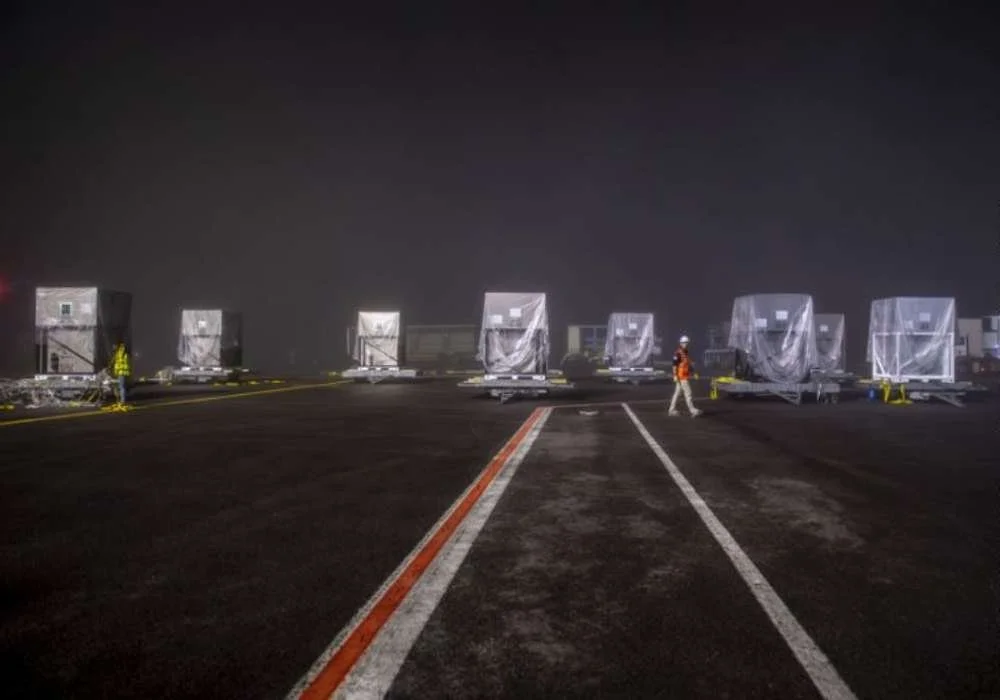
Recently the centre made news headlines as it received 32 satellites to be launched on Ariane rockets, with the first launches scheduled in February and more set to continue in April. In collaboration with Amazon LEO’s program, their core mission is to deploy the satellites to provide reliable broadband worldwide. The project, previously known as Project Kuniper, aims to provide an alternative to traditional satellite infrastructure and hopes to ultimately see 3000 satellites in orbit. Currently, there are 212 satellites in orbit with another 30 to be sent by the end of the year, across 20 separate launches from CSG.
How are Local Communities Impacted by the Guiana Launch Centre
The protection of local communities is a key concern raised by the pollution from the launch centre’s air traffic, raising the question how do they protect their local communities. One crucial question is how do they maintain progress with commitments, such as environmental promises, as French Guiana are associated with the European Union. One of the programs that they would have to contribute to is the “Fit for 55” package, ensuring that sectors such as renewable energy, maritime regulations, aviation regulations meet a satisfactory level of achievement by 2030.
In addition, French Guiana is under the UN’s Reducing Emissions from Deforestation and Forest Degradation initiative,which was started in 2005. The initiative was created to reduce greenhouse gas emissions related to deforestation. The association attempts to raise environmental status, encourage ecotourism and much more. Regarding the space centre, their technology is utilized to track and predict different elements to ensure no severe impact is caused to the environment. This includes air and water sensors, as well as those on land and in rivers to track set metrics to ensure there is a high standard of eco-friendly measurements.
In 2021, the facility received an upgrade that was financed by the French government and the ESA, which extended to improving public facilities. Examples included, renovating road infrastructure, water systems and local companies, all with the goal of improving the economy.
Therefore, it is clear that alongside being a world-renowned space facility, CSG also aims to support local communities and minimize impacts on factors such as the environment.
Implications For The Future of Space Travel In The West Indies
Being central to global schemes and international partnerships with space travel, the centre distinguishes itself from many other launch sites. CSG acts as a physical anchor of space economy within the West Indies, which could open doors for more collaboration with other islands. Barbados, for example, has been trying to get approval for satellite applications, while Trinidad and Tobago hosts their headquarters for satellite meteorology and climate monitoring using Earth’s observation data.
In regards to education, there is ample opportunity for collaboration with the University of West Indies to increase jobs at the St. Augustines campus and conduct research regarding geoinformatics. Such programs pose opportunities for advancement in educational space tech knowledge.
Despite regional opportunities, the Guiana Launch Centre operates under the authority of the French government and ESA, limiting local input in decision making. Whilst obtaining financial stability and access to advanced technology, raises concerns about economic dependence and the extent of which profits and opportunities benefit the country’s local communities. Europe concerns the launch centre with their strategies for space ambition, whilst not stating long-term economic plays for the rest of French Guiana. These decisions include land usage which could become problematic within the future between locals and the space centre stakeholders.
In theory, Guiana Launch Centre is a globally recognised facility within the Caribbean that can offer lots of opportunities for Caribbean islands to create jobs and economic boosts across countries, not just French Guiana alone. Hindrance to this being if investors would find value in promoting other Caribbean programs, considering benefits to Europe in this with no guarantee equal benefits for locals as for investors. Discussions would need to consider factors such as impact to communities. Therefore, currently the CSG centre stands with Europe to benefit from these long-term projects with Amazon.